
Key Takeaways
A stairlift installation in Florida may be completed quickly, but the exact schedule depends on your staircase, equipment, inventory, and home conditions.
-
A standard straight stairlift may be installed in a few hours when the product and schedule are ready.
-
Curved staircases usually require more preparation because the rail is designed for the individual staircase.
-
Outdoor, narrow, spiral, and unusually shaped stairs need a more detailed assessment.
-
Installation day generally includes fitting, testing, safety instructions, and user orientation.
-
An in-home assessment is the best way to receive a realistic installation timeframe.
Typical stairlift installation timelines in Florida
For many Florida homeowners, the installation itself is shorter than the planning that comes before it. A straight staircase with suitable equipment may be ready for installation quickly, while a curved or unusual layout can require additional design and preparation. Your location, product availability, staircase configuration, and installer schedule all matter. The most useful answer comes from an assessment rather than a guaranteed number of days.
What happens during a standard straight stairlift installation
A standard straight stairlift is fitted to a staircase that runs in one direction without turns or intermediate landings. Once the correct equipment is available, a professional installer typically secures the rail to the stairs, fits the lift, connects the required power components, and tests the system. The work is usually designed to avoid major structural changes to your home.
For a straightforward project, the on-site work may take only a few hours, although the total timeline also includes consultation, ordering, delivery, and scheduling. You can read more about professional stairlift installation if you want to understand how the fitting and training process works.
Why some installations may be completed the next day
Next-day installation may be possible when you need a straight stairlift, the appropriate product is in inventory, your staircase is ready, and an installer is available nearby. These conditions do not apply to every home or every model. A fast appointment still requires enough time to confirm measurements, equipment suitability, and safe installation conditions.
NewDay Mobility offers next-day installation for many standard straight stairlifts throughout Florida, depending on product availability, location, and the staircase assessment. The installation itself is typically completed within a few hours by our certified installers.
When scheduling or preparation can extend the timeline
A project can take longer if the equipment must be ordered, the rail needs custom design, or the staircase assessment raises questions about access and installation. Holidays, technician availability, travel distance, and a household’s preferred appointment window can also affect the schedule. If electrical work or clearing is needed first, that preparation may add another step.
The phrase realistic installation timeframe matters here. A responsible estimate should explain what is known, what remains to be confirmed, and whether the date depends on inventory or custom manufacturing.
How staircase design affects installation time
Your staircase is one of the strongest influences on the schedule. Straight stairs often use a standardized rail, while turns, curves, landings, and exterior exposure call for equipment selected for those conditions. Even a short staircase can need careful review if it is narrow or has an unusual shape. A visual assessment helps the installer plan safely and avoid surprises.
Straight staircases with standard layouts
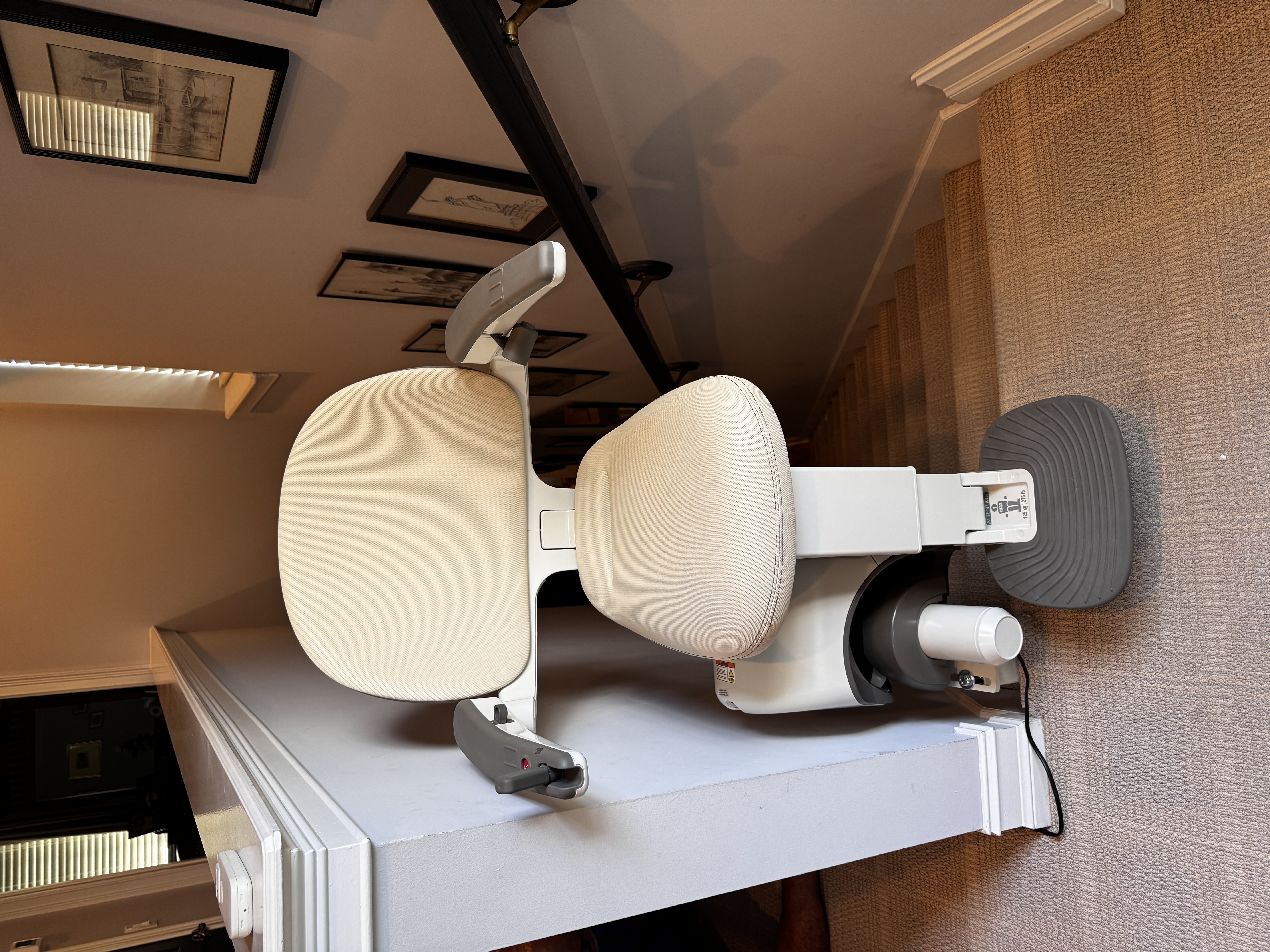
A straight staircase generally has the simplest installation path because the rail follows one continuous flight. The installer still needs to check the stair width, top and bottom clearances, landing areas, and the user’s ability to enter and exit the seat. If the layout is standard and the product is available, the installation can often be scheduled sooner than a custom project.
That does not mean every straight staircase receives the same equipment. Your mobility needs, home layout, and desired options should be considered alongside the physical staircase.
Curved staircases with turns or intermediate landings
Curved stairlifts are intended for staircases with turns, corners, intermediate landings, or more complex layouts. Their rails are designed for the individual staircase, so the preparation stage generally takes longer than it does for a standard straight rail. Once the custom stairlift is ready and the appointment is scheduled, the on-site installation may still be completed in about a day in some cases.
The curved stairlift options page explains why a custom rail is useful for winding stairs and why the installation date depends on the system being ready first. Ask for the expected design, manufacturing, and installation stages separately.
Outdoor staircases and exterior installation considerations
An outdoor stairlift brings additional questions about the staircase, landing areas, exposure, and access to the home. The installer needs to confirm that the selected equipment is appropriate for exterior use and that the location can be fitted safely. Florida rain, sun, salt air, and humidity make the assessment especially useful, particularly near coastal communities.
Outdoor stairlift projects may be simple or complex depending on the stair flight and the condition of the surrounding area. The time estimate should account for both equipment preparation and the practical conditions at the entryway, porch, patio, or raised access point.
Narrow, spiral, or unusually configured staircases
Narrow and spiral stairs require close attention to clearance and the way you will board, ride, and exit the lift. A compact arrangement may be possible, but the installer must evaluate the full route rather than judging the staircase from a single photograph. Landings, doorways, banisters, and nearby walls can affect the plan.
For an unusual layout, avoid choosing a timeframe based only on a typical straight-stair installation. A professional review can identify whether a custom curved stairlift or another home mobility solution is more appropriate.
The steps involved in stairlift installation
Although each home is different, the process follows a familiar pattern. You first discuss the user’s needs and the staircase, then review equipment choices and receive a quote or estimate. After the equipment is confirmed, the installer prepares the rail and lift for the home. Clear communication at each stage makes the eventual appointment easier for you and your family.
Initial consultation and staircase assessment
The first conversation should cover the staircase layout, where the lift is needed, who will use it, and any concerns about transfers or daily routines. An assessment may take place in person or use information gathered during the initial contact, depending on the project. Measurements and photographs can help, but a complicated staircase may require an in-home review.
At NewDay Mobility, we recommend the stairlift and installation plan based on your staircase, home layout, mobility needs, budget, and safety requirements. This allows us to provide a realistic installation timeframe for your specific home—not a generic estimate.
Choosing equipment based on mobility and home requirements
Equipment selection is not only about whether your stairs are straight or curved. You should also discuss indoor or outdoor use, staircase width and configuration, user requirements, weight capacity, desired features, and installation conditions. The right choice should work with the home and with the person who will use it every day.
Straight stairlifts, custom curved stairlifts, and outdoor stairlifts serve different staircase situations. If stairs are not the only access challenge, you may also ask whether a vertical platform lift or ramp deserves consideration.
Measuring, ordering, and preparing the stairlift
After the assessment, the installer or provider confirms measurements, rail requirements, equipment selection, and current availability. A standardized straight rail may be ready sooner than a rail designed specifically for a curved staircase. The home may also need simple preparation, such as clearing objects near the stairs or arranging access for the installation team.
Before ordering, request a clear explanation of what is available now and what must be made or shipped. This is also the right moment to request a quote and ask which part of the schedule is firm.
Professional installation and operational testing
On installation day, the rail is secured to the stairs and the lift is fitted according to the planned configuration. The installer then checks movement, stopping points, controls, charging or power arrangements, and safety functions applicable to the equipment. You should have time to use the lift while the installer observes and answers questions.
The work is not finished merely because the lift moves. Testing and instruction help you understand everyday operation and give you an opportunity to raise concerns before the installer leaves.
Factors that can speed up or delay stairlift installation
Several moving parts shape the schedule, and some are outside your control. Inventory, manufacturing, property access, electrical conditions, and technician coverage can each change the expected date. You can reduce uncertainty by sharing accurate information early and asking which assumptions support the estimate. A careful provider will distinguish a likely timeframe from a confirmed appointment.
Product availability and current inventory
A suitable stairlift in current inventory can shorten the wait, especially for a standard straight staircase. If the selected product or configuration is not available, delivery may become the limiting step. Inventory can change, so an answer given during an initial call should be confirmed before you make household arrangements.
Ask whether the available product meets the user’s needs and staircase requirements, rather than choosing only by speed. Fast installation is helpful only when the equipment is appropriate.
Custom rail design and manufacturing requirements
A curved rail must be designed for the individual staircase, particularly when the route includes turns, corners, or intermediate landings. That design and manufacturing work can extend the pre-installation timeline. Once the rail is ready, the installation itself may be relatively efficient, but the earlier stages still matter.
A useful schedule should identify whether you are waiting for an assessment, design approval, manufacturing, shipping, or an installation appointment. Those are different stages, and combining them into one vague estimate can create confusion.
Home access, electrical, and installation conditions
The installer needs a safe path to the staircase and enough room to work. Stored items, difficult access, damaged stairs, unusual railings, or questions about power can require additional preparation. You may be asked to move furniture or make another professional assessment before the lift can be installed.
Before the appointment, confirm these practical details:
-
Which rooms or entrances the installer will need to access.
-
Whether the staircase and landings should be cleared beforehand.
-
Whether anyone needs to be home during the assessment or installation.
-
Whether existing electrical conditions require review.
Handling these details early can prevent a scheduled visit from turning into a return appointment. It also gives you a clearer idea of what the installation day will involve.
Technician scheduling and Florida service-area coverage
NewDay Mobility provides stairlift installation throughout Florida, including Central Florida, the Gulf Coast, South Florida, and communities across the state. Appointment timing can vary based on location, product availability, staircase type, and installer scheduling.
Call NewDay Mobility with your address and staircase information to confirm the earliest available assessment and installation date. Many standard straight stairlifts may qualify for next-day installation.
What to expect on installation day
Installation day is usually more orderly when the assessment and equipment selection have already been completed. You can expect the installer to review the staircase, protect the work area as appropriate, fit the system, and test its operation. The length of the visit depends on the equipment and the layout. Plan to remain available so questions can be answered as the work progresses.
How the installation area should be prepared
Clear the stairs, landings, and nearby approach areas of shoes, boxes, plants, and loose rugs. If a caregiver or family member will help with the first use, coordinate their arrival in advance. Keep pets away from the work area and tell the installer about doors, furniture, or household routines that could affect access.
You do not usually need to remodel the staircase for a typical stairlift, but the installer should confirm the exact preparation needed for your home. If another contractor’s work is required, settle that before the appointment where possible.
How the rail and stairlift are fitted to the staircase
The rail is positioned along the staircase and secured to the steps according to the planned layout. The lift is then attached and adjusted so you can approach, board, ride, and exit as safely as possible. The installer may check clearances at the top and bottom and review how the lift parks when not in use.
The fitting should reflect the assessment rather than a one-size-fits-all assumption. Speak up if the proposed position seems difficult for the user to approach or if a doorway or landing feels obstructed.
Safety checks and user orientation
After fitting, the installer tests the lift and reviews the controls, seat belt or other applicable safety features, charging or power procedures, and emergency guidance. You should receive an explanation in plain language and have a chance to operate the lift yourself. If more than one person will use it, each regular user should practice with supervision.
Do not rush this part of the visit. A few careful practice runs can reveal questions about turning, transfers, parking, or controls that are easier to address immediately.
Questions to ask before the installer leaves
Ask how to use the lift safely, what to do if it stops, how charging or power works, and whom to contact for service or repair. Confirm what documents or instructions you will receive and whether any follow-up visit is planned. You can also ask about service coverage, stairlift rentals, and the exact warranty terms for the equipment you selected.
Write down the answers if several family members share responsibility for the home. Clear information is part of a successful installation, not an extra.
Planning a stairlift installation in different Florida homes
The best schedule depends partly on how the staircase fits into your daily life. A lift inside a multilevel home presents different access questions from one serving an outdoor porch or raised entry. Florida’s climate adds another layer for exterior equipment. Thinking through the routine before the appointment helps you choose a practical installation plan.
Indoor installations in single-story and multilevel homes
In a single-story home, the staircase may connect the main living area to bedrooms, storage, or another frequently used space. In a multilevel home, you may need to consider where the lift starts and stops, how it affects family traffic, and whether one staircase serves several routines. The installer can discuss the route and likely installation conditions during the assessment.
If you are helping a parent, observe when and how they use the stairs rather than focusing only on the number of steps. That information can make the equipment choice and scheduling conversation more useful.
Outdoor stairlifts for porches, entryways, and raised areas
An outdoor stairlift can support access to a porch, entryway, patio, garage, or other raised area when the staircase and surrounding conditions are suitable. The assessment should consider weather exposure, landing space, drainage, surfaces, and how the user will approach the lift from inside and outside the home.
Outdoor equipment may require different preparation from an indoor installation. Ask which portions of the project are included in the proposed schedule and whether the installer needs access to more than one entrance.
Considerations for homes in coastal and high-humidity environments
Salt air, strong sun, rain, and humidity are normal concerns for many Florida properties, especially near the coast. Your provider should discuss whether the selected outdoor equipment is appropriate for the location and what care or service may be recommended. The condition of the stairs and nearby surfaces also matters.
These environmental questions do not automatically determine the installation date, but they can affect equipment selection and preparation. Share the property’s location and exposure during the first conversation.
Coordinating installation around caregivers and household routines
Choose an appointment when the primary user, caregiver, or another trusted family member can be present for instruction. If the staircase is the only route between important rooms, plan how the household will move around the work while the installation is underway. A morning or afternoon preference may affect availability, so mention it early.
A short written plan can help: identify who will attend, which entrance the installer should use, what needs to be moved, and who will practice with the user afterward. Small details often make the day feel much less disruptive.
How to get an accurate stairlift installation timeframe
You can make the first call more productive by preparing a few basic details. The goal is not to diagnose the staircase yourself; it is to give the provider enough context to arrange the right next step. Be open about urgency, mobility concerns, and any limits on when your household can accommodate a visit. Then ask for a timeline that separates assessment, equipment readiness, and installation.
Information to provide during the initial call
Tell the provider whether the staircase is straight, curved, spiral, narrow, or outdoors. Share the Florida city or county, the number of flights, the user’s mobility needs, and whether the lift is needed urgently. Photographs can help with an initial discussion, but they may not replace an in-home assessment.
Also mention doorways, intermediate landings, unusual railings, and whether the home is occupied by caregivers or other residents. More context usually leads to fewer scheduling surprises.
Why an in-home or staircase assessment may be necessary
A staircase can look straightforward in a photograph while presenting clearance or boarding questions in person. An assessment lets the installer consider the full route, landing areas, access points, and the user’s routine. It is especially valuable for curved, outdoor, narrow, spiral, or unusually configured stairs.
The assessment also gives you a chance to discuss alternatives if a stairlift is not the only practical solution. A reliable timeframe should follow a clear understanding of what will actually be installed.
How to confirm equipment availability and scheduling
Ask whether the recommended equipment is in inventory, needs to be ordered, or requires a custom rail. Confirm the expected date for the assessment, the expected date when equipment will be ready, and the proposed installation appointment. If any date is conditional, ask what event must happen before it becomes firm.
NewDay Mobility provides professional installation and continued service after installation, while fast or next-day availability depends on product, configuration, inventory, location, and scheduling. Confirm current details directly before making travel or caregiver arrangements.
When to ask about rentals, service, or alternative mobility solutions
If your need is temporary, urgent, or still changing, ask whether a stairlift rental is available for your situation. You can also ask about service and repair after installation, especially if the home will depend on the lift every day. A vertical platform lift or accessibility ramp may be worth discussing when the access challenge is not limited to one staircase.
These questions do not commit you to a particular product. They simply help you compare practical options, costs, preparation needs, and timing before you decide.
Talk Through Your Options
Need a stairlift installed quickly? Contact NewDay Mobility for a straightforward assessment of your staircase, mobility needs, and installation timeline. Many standard straight stairlifts may qualify for next-day installation throughout Florida. Our certified installers will help you choose the right solution—without a pushy sales process.
Conclusion
The installation itself may take only a few hours or about a day once the right equipment is ready, but curved, outdoor, narrow, and unusual staircases often require more preparation. By arranging an assessment, confirming inventory, and coordinating the home in advance, you can approach your stairlift installation with a clearer and more realistic timeframe.
Frequently Asked Questions
How long does a straight stairlift installation usually take?
The on-site installation for a standard straight stairlift may take only a few hours when the equipment is available and the staircase is ready. The full process can take longer because it includes assessment, ordering, delivery, and scheduling.
Can a stairlift be installed the next day in Florida?
Yes. NewDay Mobility offers next-day installation for many standard straight stairlifts in Florida when the correct equipment is available and the staircase assessment is complete. Availability depends on the product, location, staircase, and installation schedule.
Why do curved stairlifts take longer to arrange?
A curved stairlift usually requires a rail designed for the individual staircase. Turns, corners, intermediate landings, and complex layouts add design and manufacturing steps before the installation can be scheduled.
Does an outdoor stairlift take longer to install?
It may, depending on the staircase, equipment, weather exposure, landing areas, and condition of the surrounding property. An assessment is useful for identifying preparation needs before an installation date is set.
Do you need to remodel your staircase for a stairlift?
A typical stairlift is fitted to the staircase and does not usually require major structural remodeling. The installer must still review the stairs, clearances, power arrangements, and any unusual conditions in your home.
What should you do before the installer arrives?
Clear the stairs and nearby landings, arrange access to the home, keep pets away from the work area, and make sure the primary user or caregiver can attend the orientation. Ask in advance whether any additional preparation is required.
What if your staircase is narrow or unusually shaped?
Do not assume it is unsuitable based only on appearance. A professional assessment can review clearances, boarding areas, landings, and the user’s needs to determine whether a suitable stairlift or another mobility solution may work.