
Key Takeaways
The safest stairlift for seniors is the one that fits the staircase, the rider, and the way the home is used. A professional assessment helps you compare comfort, safety, installation, and long-term support before you commit.
- Match the lift to the user’s mobility, balance, strength, and transfer needs.
- Choose straight, curved, outdoor, or vertical platform equipment based on the home’s layout.
- Review seating, controls, obstacle detection, transfer support, and battery performance.
- Have the staircase measured and the equipment installed and tested professionally.
- Request current pricing, warranty details, available payment options, and availability in your Florida location.
What makes a stairlift safe for seniors?
A stairlift should make daily movement between floors feel more controlled, not introduce another difficult task. The safest stairlift for seniors is selected around the individual rider and the staircase rather than chosen from a generic list of features. You also need to consider how the lift will work during ordinary routines, visitors, maintenance, and a possible power interruption.
Matching the lift to the user’s mobility needs
Start with the rider’s actual routine. Think about balance, leg strength, flexibility, hand control, ability to sit and stand, and whether another person may need to assist with transfers. A consultation should also account for whether the user expects to ride once or several times a day.
A lift can reduce the need to walk on stairs, but it does not replace a careful assessment of the person’s comfort and independence. Share any concerns with the installer so the equipment and seating arrangement can be discussed before an order is placed.
Choosing the right seat, controls, and transfer support
The seat should feel stable when you sit down and remain comfortable throughout the ride. Controls need to be reachable without twisting or stretching, especially if hand strength or coordination is limited. Consider where the rider will enter and exit, and whether the seat position supports a steady transfer.
Simple operation matters every day, particularly when a senior is tired or using the lift without assistance. Ask for a demonstration of the controls and have the intended rider practice safely before the installation is finalized
Considering staircase width, layout, and landing space
Measure more than the stair treads. The usable width, railing, doorways, landings, turns, and nearby furniture can all affect how the lift fits and how people continue to use the staircase. Narrow stairs may require careful attention to folding components and clearance.
An in-home assessment is especially useful for stairs with a half landing, winding section, or limited space at the top and bottom. You can review additional guidance on narrow staircase planning before your appointment, but the final fit should be confirmed at the home.
Accounting for indoor and outdoor safety conditions
Indoor stairs need clear boarding and exit areas, secure positioning, and a route that works in the home’s normal lighting. Exterior stairs add rain, humidity, heat, surface conditions, and exposure to the elements. Equipment intended for outdoor use should be selected for that setting rather than treated as an indoor lift placed outside.
If you are comparing providers, review Florida stairlift company considerations such as installation quality, service coverage, equipment options, and written pricing. Those practical details are part of safety because support may matter long after the first ride.
Which stairlift type is safest for your Florida home?
The safest type depends first on the staircase. A straight lift may suit a single uninterrupted flight, while a custom curved system may be needed when the rail must follow turns or intermediate landings. Exterior steps and changes in level may call for different equipment altogether.
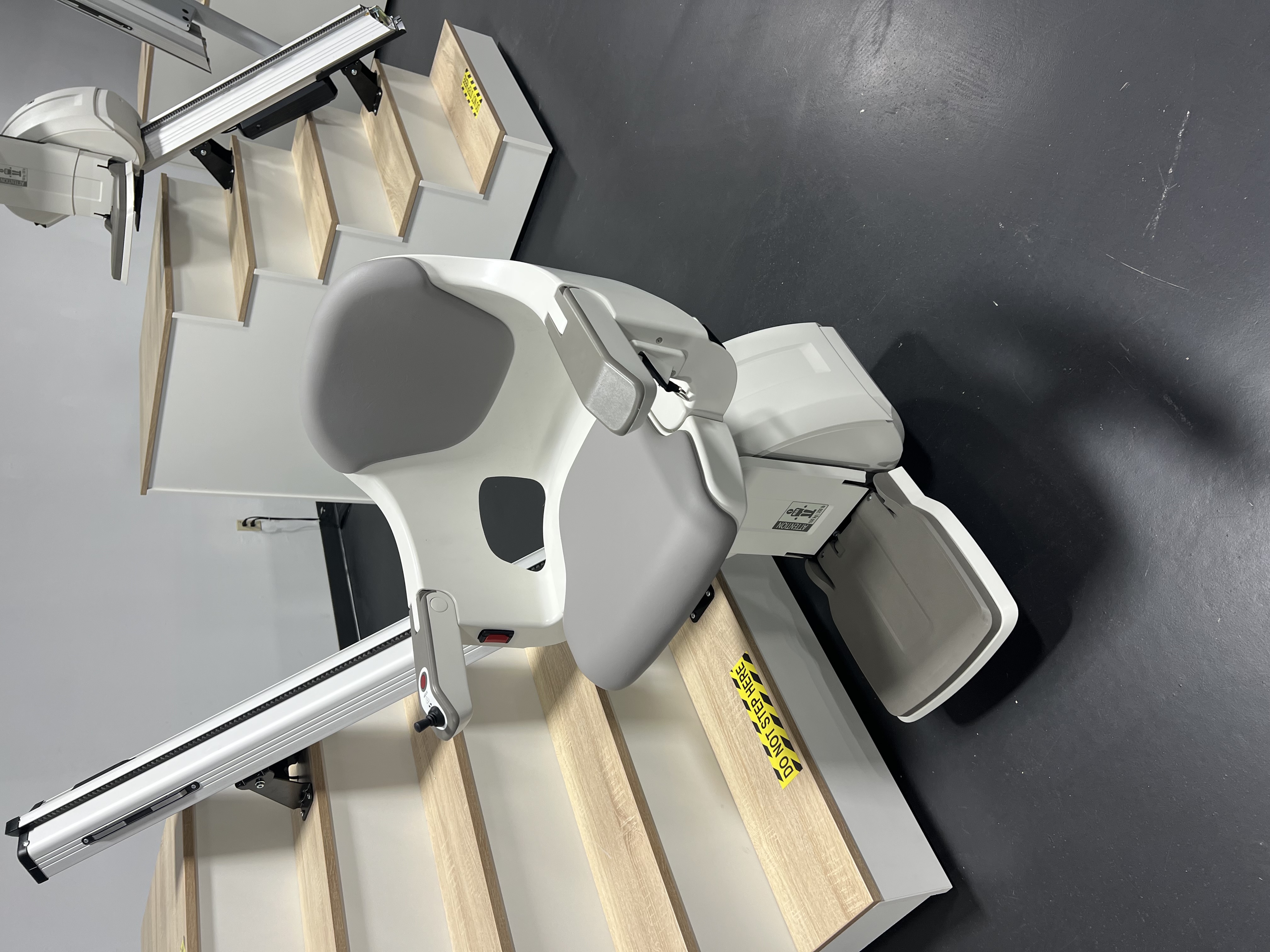
Before comparing prices, identify the route the rider needs to travel and where they must safely board and leave the equipment. A professional visit can clarify whether a stairlift or another accessibility solution is the better fit.
Straight stairlifts for standard staircases
Straight stairlifts are intended for standard straight staircases without turns or intermediate landings. They generally use a standardized rail fitted to the straight flight, though the final installation still depends on measurements, clearances, and the selected model.
Straight stairlifts can be a practical choice when the staircase has a simple layout and the rider needs reliable access between floors. Ask which options are included, whether the equipment is available, and how quickly installation can be scheduled in your area.
Curved stairlifts for turns, curves, and intermediate landings
Curved stairlifts are designed for stairs with turns, curves, intermediate landings, or more complex layouts. The rail is designed for the individual staircase, so the process typically involves detailed measuring and additional design or manufacturing time.
A curved system may preserve access across several parts of the staircase without requiring the rider to transfer at a landing. You should still review the boarding positions, landing clearances, and expected timeline with the installer.
Outdoor stairlifts for exterior steps
Outdoor stairlifts are designed for exterior staircases leading to places such as entrances, porches, or garages. Florida weather makes the installation setting especially relevant: rain, humidity, direct sun, and debris should be discussed when selecting equipment and planning care.
For a closer look at exterior access, read about outdoor stairlift options. The product, installation requirements, and ongoing support should all be confirmed for your particular steps and Florida location.
Vertical platform lifts as an alternative to stairlifts
A vertical platform lift may be worth considering when the user travels with a mobility device or when a seated stairlift does not suit the home’s layout. It moves a platform between levels rather than carrying the rider on a stair-mounted seat.
The right choice depends on available space, access points, building conditions, and the user’s mobility equipment. Treat it as an alternative to evaluate with an accessibility professional, not as a universal replacement for a stairlift.
Safety features to evaluate before choosing a stairlift
Features should support the rider’s real habits rather than serve as a long checklist. Ask what each feature does, how it is operated, and whether it is included or optional on the model under consideration. You should also understand how the lift responds when something is not positioned correctly.
Secure seating and stable positioning
A secure seat helps the rider remain positioned during travel and makes boarding less stressful. Look at the seat height, arm support, foot placement, and the space available to turn or sit down safely. The installer should explain how the rider is expected to approach the seat at both ends of the stairs.
Have the intended user try the seat if possible. Comfort and confidence are practical safety considerations when the equipment will be used repeatedly.
Controls that are easy to reach and operate
Controls should be understandable and reachable from the seated position. A rider may need to stop, start, or call the lift without leaning awkwardly, so the control location deserves the same attention as the motor and rail.
Ask for a demonstration using the rider’s hands and usual posture. If a caregiver may operate the lift, confirm how that person can use the controls without blocking the rider’s path.
Obstacle detection and safe stopping considerations
Look for safety sensors around the carriage and footrest that automatically stop the stairlift when an obstruction is detected.
Do not assume a sensor eliminates the need for a clear staircase. Keep the route maintained and ask the installer to explain the system’s normal response when an obstruction is detected.
Swivel seats, seat belts, and other available options
A seat belt helps keep the rider securely positioned during travel. A locking swivel seat allows the rider to turn toward the landing and transfer without stepping directly onto the staircase. Depending on the model, powered swivel seats and folding footrests may also make daily use easier.
Consider the options in relation to the person who will ride, not simply the number of additions offered. A focused selection can keep the controls manageable and the boarding routine clear.
Battery performance during power interruptions
Many stairlift systems use rechargeable batteries, but you should confirm the battery arrangement and expected operation for the specific model. Ask what happens during an outage, how the system recharges, and what maintenance the batteries require.
Power reliability is especially worth discussing in Florida, where storms can interrupt household electricity. Include battery questions in the written quote so you understand what is part of the proposed equipment.
Why professional installation matters
A stairlift is attached to a staircase that people still use, so the installation affects both the rider and everyone walking through the home. Professional work begins with accurate measurements and continues through testing and instruction. It also gives you a clear point of contact for service questions later.
NewDay Mobility’s certified installers carefully measure, install, test, and demonstrate every stairlift before the job is considered complete.
Measuring the staircase and confirming fit
An installer should examine the full staircase, including the top and bottom landings, turns, railings, doors, and available walking space. Measurements help determine whether the proposed rail and seat can operate without creating avoidable clearance problems.
This visit is also the right time to describe the rider’s transfer routine and any household concerns. A quote based only on a photograph may not capture the conditions that affect installation.
Installing the rail and equipment correctly
The rail, carriage, seat, and related components need to be fitted according to the equipment and the staircase. The installation should leave the system secure while preserving reasonable access for other household members.
Ask what work will be completed, whether any unusual staircase conditions affect the plan, and how the home will be left after installation. Clear explanations make it easier to use the system with confidence.
Testing the lift before the homeowner uses it
Before the rider takes the first independent trip, the installer should operate the lift through its route and check the boarding and exit points. The user and caregiver should receive a practical demonstration rather than only written instructions.
Practice should include starting, stopping, fastening the seat belt correctly, and responding to a problem. Take the time to ask questions while the installer is present.
Planning for service, repairs, and future support
Ask who to contact if the lift needs service, how repairs are arranged, and what warranty terms apply to the selected product. Continued support matters because the equipment is part of the home’s daily access, not a one-time purchase.
NewDay Mobility provides professional installation and continued local service after installation. Before purchasing, ask for a written explanation of the warranty coverage, maintenance recommendations, and service process for your selected stairlift.
How to choose the safest stairlift for Florida conditions
Florida homes vary widely, from compact interior staircases to raised homes with exposed entry steps. Climate, construction, daily routines, and the rider’s changing needs all belong in the decision. A safe choice should work now while remaining practical for the way you expect to use the home.
Preparing for humidity, rain, and outdoor exposure
For exterior stairs, ask about materials, weather exposure, drainage, and the location of electrical components. The lift should be intended for outdoor use, and the maintenance plan should account for Florida’s humidity, rain, and heat.
Keep the approach clear and inspect the route periodically for slippery surfaces, leaves, or standing water. Outdoor conditions can affect the stairs themselves even when the lift is working properly.
Considering the needs of seniors aging in place
Think beyond the first month. A senior’s strength, balance, vision, and confidence may change, so the lift should remain understandable and comfortable as routines evolve. Caregivers should be able to explain the basic operation without taking over every trip.
You can also compare a stairlift with ramps or vertical platform lifts if the home has multiple access challenges. The goal is dependable movement through the home, with as little unnecessary disruption as possible.
Reviewing weight capacity and user requirements
Confirm the equipment’s weight capacity for the intended rider. Do not estimate this from a similar-looking model; the exact product and configuration should be identified in the proposal Do not estimate this from a similar-looking model; the exact product and configuration should be identified in the proposal.
Discuss height, seating comfort, transfer ability, and whether more than one person will use the lift. These details help the installer recommend equipment without assuming that one configuration suits every household.
Confirming product availability and installation timing
Availability and timing can depend on the model, staircase configuration, inventory, location, and scheduling. Straight systems may sometimes qualify for fast or next-day installation when conditions allow, while custom curved systems generally need more design and manufacturing time.
If you live within NewDay Mobility’s Florida service area, confirm current product availability and installation timing for your location. A written timeline is useful when a family is coordinating a move, recovery, or caregiving schedule.
Comparing stairlift brands and equipment options
Brand names can help you organize a conversation, but they do not determine the safest choice by themselves. The appropriate equipment depends on the staircase, user, location, capacity, desired features, and installation conditions. Compare documented capabilities and current availability rather than assuming every model is offered for every home.
Access BDD options for complex staircase configurations
The Access BDD Flow X is designed for curved, narrow, spiral, and complex staircases. Its custom rail can follow turns and intermediate landings where a standard straight stairlift cannot.
A professional staircase assessment determines the correct rail design, parking position, seat configuration, and clearances for the home.
Harmar straight, heavy-duty, curved, and outdoor options
Harmar offers several mobility solutions, including Pinnacle straight and heavy-duty stairlifts, Helix curved stairlifts, outdoor models, and Highlander vertical platform lifts. The appropriate model depends on the rider’s needs, staircase layout, required capacity, and installation environment.
Discuss the exact model, capacity, features, and installation requirements in your proposal. Current availability may vary according to your needs and the equipment in stock.
Why the appropriate model depends on the staircase
A straight staircase, a tight turn, and an exposed exterior flight create different installation questions. Rail design, landing space, seating, weather exposure, and the rider’s transfer needs can change which model makes sense.
Use this comparison as a starting point, then request an in-home assessment. A useful decision should connect the documented equipment category to the measurements and routines of your own home.
How NewDay Mobility helps compare available equipment
NewDay Mobility is a Florida stairlift dealer offering trusted equipment from Access BDD and Harmar. Our team compares straight, curved, outdoor, and other home-accessibility solutions based on the customer’s staircase, mobility needs, preferred features, and installation requirements.
When you compare options, ask for the model name, proposed features, installation requirements, warranty terms, and current availability. You can also schedule a stairlift consultation to discuss the route and the rider’s needs.
What to consider when budgeting for a safe stairlift
Price is only one part of the cost decision. The staircase, rail, model, options, installation requirements, location, and current promotions can all affect the final amount. A lower initial figure may not answer the questions that matter most for long-term use.
Understanding the factors that affect stairlift pricing
Straight stairlifts often have a more standardized rail, while curved systems require a rail designed for the individual staircase. Outdoor conditions, heavy-duty requirements, additional options, installation complexity, and service needs may also affect pricing.
Before comparing proposals, make sure each one describes the equipment and installation scope. For broader planning, review this Florida stairlift cost guide, then treat any general market discussion separately from an actual quote.
Reviewing straight stairlift starting prices when applicable
NewDay Mobility offers select straight stairlifts starting at $3,990 installed. Final pricing depends on the staircase, model, rail length, selected options, installation requirements, location, and current availability.
Use a starting figure as a prompt for questions, not as a promise. Request the current installed price and confirm exactly what the proposal includes.
Requesting a personalized quote for a curved stairlift
A custom curved stairlift is individually designed for the customer’s staircase and requires a personalized quote. The final amount cannot responsibly be reduced to a universal number because each rail and installation has its own requirements.
Provide photographs if requested, but expect the staircase and landings to be assessed carefully. Ask how design, manufacturing, installation, and selected options are reflected in the quote.
Checking warranty coverage and financing eligibility
NewDay Mobility offers lifetime warranty coverage on qualifying stairlifts. Coverage terms may vary by product, model, and component, so request the complete warranty details in writing.
Financing may be available to qualified customers. Ask about current payment options and review all applicable terms before making a decision.
Confirming current offers and terms with NewDay Mobility
Confirming current offers and terms with NewDay Mobility. Before ordering, ask the provider to confirm the current offer, the installation scope, expected timing, service process, and any conditions that apply to your Florida address.
A written proposal gives you something concrete to review with family members or caregivers. It also helps you compare safety and support instead of looking only at the headline price.
Plan Your Next Step
If stairs are becoming difficult, contact NewDay Mobility to discuss a professional assessment and available stairlift or vertical platform lift options for your home. Share your staircase layout, the rider’s needs, and your preferred timing so the team can explain what may fit your situation.
Conclusion
The safest stairlift for seniors is the one that suits the rider, fits the staircase, and comes with careful installation and dependable follow-up. By comparing the lift type, seating, controls, weather conditions, pricing, and support terms, you can make a calmer and more informed decision for your Florida home.
Frequently Asked Questions
What is the safest stairlift for seniors?
The safest choice depends on the rider’s mobility needs, the staircase layout, the boarding and exit spaces, and the equipment’s safety and support features. A professional assessment is the best way to identify a suitable option.
Are straight or curved stairlifts safer?
Neither type is automatically safer for every home. A straight stairlift suits a standard uninterrupted staircase, while a curved stairlift is designed for turns, curves, intermediate landings, or more complex layouts.
Can a stairlift be used on outdoor stairs in Florida?
Yes, outdoor stairlifts are designed for exterior staircases, but you should confirm that the selected equipment is intended for outdoor conditions. Rain, humidity, heat, drainage, and surface conditions should be part of the assessment.
What safety features should you look for in a stairlift?
Review secure seating, accessible controls, transfer support, obstacle detection, safe stopping, seat belts or swivel seating when appropriate, and battery performance during power interruptions. The useful combination depends on the rider and the equipment.
How much does a stairlift cost in Florida?
Pricing varies with the staircase, model, rail length, options, installation requirements, location, and current promotions. Straight stairlifts may have a starting price when applicable, while custom curved stairlifts require personalized quotes.
Does Medicare pay for a stairlift in Florida?
Original Medicare generally does not cover stairlifts because they are considered home modifications rather than covered durable medical equipment. Some Medicare Advantage plans or assistance programs may offer different benefits, so contact the specific plan or agency to confirm eligibility.
How long does stairlift installation take?
Installation timing depends on the product, staircase configuration, inventory, location, and scheduling. Many straight stairlifts can be installed as soon as the next day when equipment and scheduling are available, while custom curved systems require additional design and manufacturing time.