
Key Takeaways
A stairlift is an important mobility device in your home, so routine attention matters even when it appears to be working normally.
- Follow the service interval in your stairlift’s manufacturer instructions.
- Many manufacturers and stairlift professionals recommend an inspection about once a year.
- Consider more frequent servicing if the lift is used many times each day.
- Florida humidity, rain, salt air, and outdoor exposure can affect maintenance needs.
- Stop using the lift and request service if it behaves unpredictably or feels unsafe.
- NewDay Mobility offers complimentary maintenance with qualifying stairlift purchases; ask what services and time period are included.
How often should a stairlift be serviced?
If you are wondering how often should a stairlift be serviced, the safest starting point is the manufacturer’s schedule and your technician’s advice. Many homeowners arrange a professional inspection annually, then adjust that timing according to usage and installation conditions. Regular servicing can identify wear before a small issue becomes a disruption to someone’s daily routine.
Follow the manufacturer’s recommended service schedule
A model-specific schedule is especially useful if your stairlift has a custom rail, an outdoor installation, or a history of repairs. NewDay Mobility provides professional stairlift service and repair and offers complimentary maintenance with stairlift purchases. Ask what maintenance is included and what schedule is recommended for the equipment installed in your home.
Consider a professional inspection about once a year
An annual inspection gives a qualified technician an opportunity to assess the lift before you notice a serious problem. The visit should look beyond whether the seat moves up and down: the rail, carriage, controls, charging system, and safety features all deserve attention. You should also receive clear guidance about any repairs or follow-up work that may be needed.
A yearly visit is a sensible baseline, not a guarantee that every household has identical needs. If your technician identifies a shorter interval for your equipment or circumstances, follow that recommendation.
Service a stairlift more often with frequent daily use
Frequent trips place more operating cycles on moving parts and batteries. If several people rely on the lift, or one rider uses it repeatedly throughout the day, ask whether a six-month inspection or another shorter interval would be appropriate. Your service provider can base that advice on the model, its condition, and how it is actually used.
A simple usage record can help you describe the household’s routine. Note changes such as longer travel times, more frequent charging, or a need to reset the controls, since these details may help the technician plan the visit.
Adjust maintenance for outdoor and humid Florida conditions
Outdoor stairlifts face rain, heat, humidity, airborne grit, and sometimes salt air near the coast. Even a covered installation may need closer observation after storms or periods of heavy moisture. Indoor lifts can also be affected by Florida’s humid conditions, particularly in areas with poor ventilation.
Do not assume that an indoor service schedule automatically applies outdoors. Ask for maintenance guidance specific to your installation, and arrange an inspection after unusual weather or visible water exposure.
What affects a stairlift’s service frequency?
There is no single interval that fits every stairlift in Florida. The staircase, equipment design, rider’s routine, and installation environment all influence wear. Your service plan should reflect the way the lift is used, not just the date it was installed.
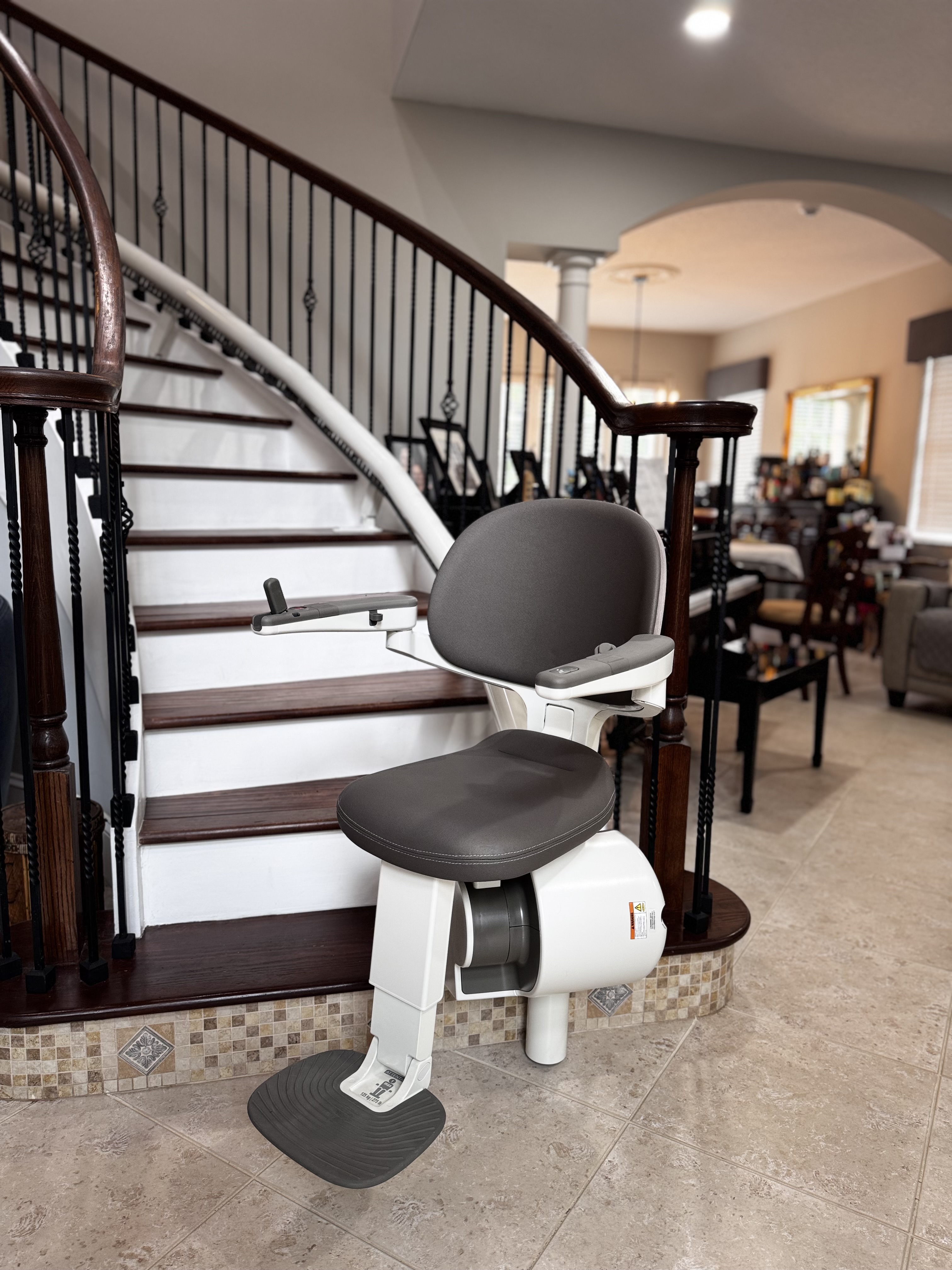
Staircase type and equipment design
A straight stairlift generally follows a simpler rail path than a curved system designed around turns, landings, or a more complex staircase. The carriage, rail, seat, and controls may also differ between models. Those differences affect what a technician checks and how often the equipment may benefit from professional attention.
If you are still choosing equipment, review these stairlift selection guides before focusing only on the service interval. A proper assessment connects the staircase layout with the rider’s comfort, transfers, and everyday safety.
Indoor versus outdoor installation
An indoor lift is protected from direct weather, while an outdoor lift is exposed to conditions that can accelerate dirt buildup and surface wear. Rainwater, condensation, and debris can affect charging areas and moving components if they are not addressed. Outdoor equipment may therefore warrant more frequent checks or additional care after storms.
Your technician should explain which parts you may clean and which parts should remain untouched. Never use household products or lubricants on the lift unless the equipment instructions specifically approve them.
Household usage and rider needs
A lift used once or twice a day has a different workload from one used throughout the day by multiple household members. Rider needs also matter: a person who needs extra time for transfers may place different demands on the swivel seat, armrests, controls, or belt. Changes in mobility can be a reason to request an assessment even if the lift has no obvious fault.
Watch for changes in the daily routine, including hesitation before sitting, difficulty reaching a control, or uncertainty while exiting. These observations help a professional evaluate whether adjustments or additional instruction are appropriate.
Age, condition, and previous repair history
Older equipment and lifts with recurring repairs deserve closer attention than a recently installed unit with a clean service history. A past battery replacement, carriage issue, or electrical fault does not automatically mean the lift is unsafe, but it should be documented and discussed at the next visit. A clear service history makes it easier to spot patterns and plan responsible repairs.
Use a simple record to keep the most useful details together:
- Date and reason for each service visit
- Repairs, adjustments, or parts replaced
- Any error indicators or repeated power interruptions
- Technician recommendations and the next suggested service date
Bring that record to each appointment. It gives the technician context and helps you avoid delaying a recommended follow-up.
Warning signs that a stairlift needs attention
A stairlift does not need to fail completely before you call for help. Small changes in sound, speed, charging, or fit can be early signs that the equipment needs inspection. If something feels different from normal, treat that change seriously, especially when a family member depends on the lift.
Unusual noises, shaking, or rough movement
Grinding, clicking, squealing, vibration, or a jerky ride is not something you should ignore. Dust or ordinary wear may be involved, but the cause cannot be confirmed safely from the seat. Stop and report what you heard, including whether it happens during travel, turning, starting, or stopping.
Do not spray lubricant into the rail or carriage in an attempt to quiet the sound. An incorrect product can interfere with approved lubrication or conceal a developing mechanical problem.
Slower travel, stopping, or inconsistent operation
A lift that travels more slowly, pauses unexpectedly, or works only after repeated attempts needs professional attention. Intermittent faults can be difficult to reproduce, so write down when they happen and whether the lift was starting, stopping, charging, or carrying a rider. Avoid treating a reset as a permanent fix.
Keep the lift out of service if movement becomes unpredictable. A technician can determine whether the issue involves the controls, carriage, power supply, rail, or another component.
Battery, charging, or power-related problems
If the lift does not remain charged, fails to respond after being parked, or repeatedly loses power, check only the basic items described in the manual. The charging point should be unobstructed, and the power supply should be handled as the manufacturer instructs. Repeated charging problems call for service rather than repeated guesswork.
Power interruptions can be particularly concerning in Florida homes where the stairlift is part of a daily access route. Ask your service provider how your model should be parked and charged, and what to do if the unit stops during a trip.
Loose parts, damaged upholstery, or visible wear
Loose armrests, a damaged seat, worn belt material, cracked covers, or exposed wiring should be reported. Cosmetic wear may not affect operation, but it can point to frequent use, impact, moisture, or a component that needs replacement. The safety belt and transfer areas deserve immediate attention because they affect how secure the rider feels.
Take a clear photo if the equipment is safe to approach and describe whether the damage appeared suddenly. Do not remove covers or tighten unfamiliar parts yourself.
What happens during a professional stairlift service?
A professional service visit should be systematic and easy for you to understand. The technician reviews the equipment, tests its operation, and explains any work that is recommended. You should feel comfortable asking what was checked and whether the lift is safe to continue using.
Inspecting the rail, carriage, seat, and safety components
The technician examines the rail and carriage for visible wear, alignment concerns, debris, and secure attachment. The seat, footrest, swivel mechanism, armrests, and other safety-related components are also reviewed. The exact inspection points depend on the model and installation.
You can help by describing anything that changed since the last visit. A detail that seems minor to you may help the technician identify when a problem began.
Testing controls, sensors, belts, and safety features
Controls should respond consistently from the relevant operating positions, while sensors and safety features should be tested according to the equipment instructions. The belt, swivel seat, obstruction detection, and stopping functions are important parts of the assessment. Testing should be performed without placing you at unnecessary risk.
Ask the technician to demonstrate normal operation again if you are unsure about a control or transfer. Clear instruction is part of making the equipment practical for everyday use.
Checking batteries, charging points, and electrical connections
The technician checks battery condition, charging behavior, charging contacts, and accessible electrical connections. They may also investigate error indicators or reports of power loss. Electrical work should be left to a qualified professional, even if the visible issue appears simple.
Before the visit ends, ask how the lift should be parked and charged between uses. Following that guidance can reduce avoidable confusion and help you notice a change sooner.
Cleaning, lubricating, and adjusting approved components
Service may include cleaning, lubrication, and adjustments that are approved for the specific equipment. The technician should use the correct materials and methods rather than applying a general household cleaner or lubricant everywhere. Outdoor lifts may require particular attention to debris and moisture-related buildup.
After this work, the technician should run the lift and confirm that it operates as expected. You should receive practical advice about what you can safely clean between visits.
Identifying repairs or replacement parts before failure
A service visit can reveal a component that is worn but still functioning. Your technician should explain the condition, urgency, expected effect on operation, and whether a repair or replacement is recommended. A written estimate can help you make a considered decision rather than waiting for an inconvenient breakdown.
If the lift needs repair, NewDay Mobility’s repair service is a relevant option for Florida homeowners seeking help with unexpected operation, noise, or weather-related concerns. Confirm current availability and the work included for your model.
What Florida homeowners can do between service visits?
Your role between professional visits is mainly observation and basic care. Small, consistent habits can keep the lift’s path clear and help you report changes early. They should never replace scheduled service or qualified repairs.
Keep the rail and surrounding stairs clear
Remove shoes, toys, pet items, boxes, and other objects from the stairway and the lift’s travel path. Check that curtains, decorations, and cords cannot catch on the carriage or seat. A clear staircase also makes transfers less rushed and easier to manage.
If household storage tends to collect near the stairs, create a different place for it. Keeping the route clear is one of the simplest ways to reduce avoidable obstruction concerns.
Clean the stairlift according to the equipment instructions
Use only the cleaning method described in your owner’s materials. A soft cloth may be appropriate for some external surfaces, but you should not wet electrical areas or disturb the rail’s working surfaces without clear instructions. Pet hair, dust, and grit should be addressed before they accumulate.
Cleaning should be gentle and limited to what you are comfortable doing. If you are unsure whether a part is safe to wipe, leave it alone and ask a technician.
Check charging behavior and basic operating functions
Notice whether the lift parks correctly, responds to its controls, and remains charged as expected. You can check simple functions from a safe position, but do not continue using the equipment if it jerks, stops, or gives a warning. Record the timing and circumstances of any change.
This kind of observation is more useful than repeatedly pressing a control or switching power on and off. Share your notes at the next service visit or when you call for immediate help.
Protect outdoor stairlifts from moisture and debris
Keep leaves, branches, mud, and standing water away from the outdoor lift where you can do so safely. Follow the manufacturer’s storm guidance, and inspect the area after heavy rain or high winds. Do not cover the equipment in a way that traps moisture or interferes with its operation.
For more detailed planning, this outdoor stairlift guide explains why Florida weather and site conditions deserve attention. A technician can give model-specific advice for your home.
Avoid attempting electrical or mechanical repairs yourself
Do not open the carriage, alter wiring, adjust safety systems, or use unapproved parts. A well-intended repair can create a new hazard or affect warranty coverage. If the lift is not operating normally, leave it in a safe position and contact a qualified service provider.
Basic cleaning and observation are reasonable homeowner tasks; mechanical and electrical diagnosis is not. That boundary protects both the equipment and the person who relies on it.
When to schedule immediate stairlift service?
Some symptoms justify a call before your next planned appointment. When a lift is part of someone’s route between essential living spaces, an unexpected fault can quickly become a safety and access problem. Stop using it if you cannot trust its movement or safety features.
The stairlift stops unexpectedly or will not operate
An unexpected stop, failure to start, or repeated interruption should be treated as a service issue. Do not ask the rider to force the controls, climb around the chair, or transfer in an awkward position. Keep the area clear and follow the emergency instructions supplied with the equipment.
Tell the service provider what happened and where the chair stopped. If someone is stranded or at immediate risk, seek appropriate emergency assistance rather than attempting a repair.
A safety belt, swivel seat, or obstruction sensor malfunctions
A belt that will not latch, a swivel seat that does not lock, or a sensor that behaves inconsistently can affect safe transfers and travel. These features should not be bypassed. Arrange service before the lift is used again unless a qualified technician confirms that it is safe.
Explain whether the problem occurs every time or only under certain conditions. Intermittent safety faults still deserve prompt attention.
The unit shows error indicators or repeated power loss
Error lights, tones, display messages, or repeated loss of power should be documented and reported. Check the manual for the meaning of the indicator, but do not assume that clearing it resolves the underlying issue. Repeated power loss may involve charging, batteries, connections, or another fault.
Keep the model information and any displayed code ready when you call. That can help the service provider prepare for the assessment.
The stairlift has been exposed to water, storms, or impact
Water intrusion, storm debris, a collision, or a fall against the equipment can create damage that is not immediately visible. Do not operate the lift simply because it powers on afterward. Have it inspected, particularly if moisture reached electrical areas or the rail was struck.
For an outdoor installation, include the timing and severity of the weather event in your service request. Safe operation should be confirmed before regular use resumes.
A user no longer feels secure during transfers or travel
A rider’s loss of confidence is itself a reason to investigate. The problem may be a change in mobility, a seating or control issue, or equipment that no longer fits the person’s routine comfortably. Do not dismiss the concern as nervousness or insist that the rider continue.
Pause use and request an assessment. The right response may include an adjustment, repair, renewed operating instruction, or a broader review of the home’s accessibility needs.
Choosing a stairlift service provider in Florida
A good service provider should understand both the equipment and the conditions in your home. Ask direct questions about qualifications, model familiarity, response times, and the work covered by a visit. You are choosing ongoing support, not just a one-time fix.
Confirm experience with the stairlift’s type and configuration
Ask whether the provider works with your type of lift, including straight, curved, or outdoor configurations. A curved rail, narrow staircase, intermediate landing, or exterior installation may require different knowledge and parts. Share the model name, photographs, and any previous service records before the appointment.
NewDay Mobility works with stairlift products from manufacturers including Access BDD and Harmar, depending on the customer’s staircase, needs, availability, and installation requirements. Confirm that the provider can support your specific model before scheduling work.
Ask what inspections, adjustments, and repairs are included
A service label can mean different things from one company to another. Ask whether the visit includes operational testing, safety checks, cleaning, lubrication, battery assessment, and a written explanation of recommended repairs. Also ask whether parts and follow-up visits are priced separately.
This Florida stairlift company guide offers useful questions about matching equipment, installation, service, and cost to your needs. Use those questions to compare the quality and clarity of service proposals.
Check service availability in your Florida county
Florida is a large state, and availability can depend on your county, distance, equipment, and scheduling. Confirm coverage before you rely on a provider for routine or urgent service. NewDay Mobility serves homeowners throughout its Florida service area, including counties such as Orange, Broward, Palm Beach, Volusia, and Brevard; contact the company to confirm current availability for your address.
A local service plan is easier to manage when you know whom to call and what response options exist. Keep the provider’s contact information somewhere accessible to family members and caregivers.
Keep warranty coverage and maintenance records organized
Store the purchase documents, model information, warranty terms, service invoices, and repair notes together. Warranty coverage can vary by product, model, component, and current program, so read the terms rather than assuming every repair is included. Organized records also help a new technician understand the equipment’s history.
If your stairlift is covered by a warranty, ask whether a particular service provider or repair process is required. Get important recommendations and approvals in writing when possible.
Request current service recommendations for your specific model
Manufacturer guidance and available parts can change, and a general internet answer may not reflect your equipment. Ask for the current recommended interval, approved cleaning methods, battery guidance, and signs that warrant an earlier visit. The best plan is one you can understand and follow.
When you are ready, request service and provide the lift’s model, location, installation type, and symptoms. That information helps the provider direct your question appropriately.
Conclusion
For most Florida homeowners, a professional inspection about once a year is a common starting point, but frequent use, outdoor exposure, equipment age, and warning signs may call for earlier attention. Keep the travel path clear, follow the manufacturer’s instructions, and stop using the lift when its movement or safety features become unreliable. NewDay Mobility can help you discuss stairlift service and repair options throughout its Florida service area.
Frequently Asked Questions
How often should a stairlift be professionally inspected?
Arrange a professional inspection at least annually unless the manufacturer or technician recommends a shorter interval for your equipment, usage, or installation conditions.
Does frequent use mean a stairlift needs more service?
It can. A lift used many times each day may experience more operating cycles, so ask a qualified technician whether inspections should occur more often than once a year.
Do outdoor stairlifts need extra maintenance in Florida?
Outdoor lifts may need closer attention because rain, humidity, heat, debris, storms, and salt air can affect the installation. Follow model-specific guidance and request an inspection after significant exposure or impact.
Can I lubricate my stairlift myself?
Only use products and methods specifically approved in the equipment instructions. If you are uncertain, do not lubricate it yourself; improper products or application can cause problems.
What should I do if my stairlift starts making a strange noise?
Stop using it if the noise is accompanied by shaking, rough movement, or inconsistent operation. Note when the sound occurs and contact a qualified service provider for an inspection.
How do I know whether a battery problem is serious?
Repeated power loss, failure to remain charged, warning indicators, or a lift that does not respond after being parked should be reported. Avoid repeated resets and ask a technician to check the charging system and batteries.
Should I wait for my annual appointment if the stairlift feels unsafe?
No. A lift that feels unsafe, stops unexpectedly, or has a malfunctioning belt, swivel seat, or sensor should be taken out of use and serviced promptly.