
Key Takeaways
A stairlift is usually secured to the staircase, not the wall. The right equipment depends on your staircase layout, available clearance, mobility needs, and whether the installation is indoors or outdoors.
- Most stairlift rails are mounted to stair treads with supporting brackets.
- Straight, curved, and outdoor staircases require different planning.
- Nearby walls, trim, handrails, and flooring still matter during installation.
- A professional assessment helps confirm fit, safety, timing, and price.
- Florida homeowners should ask about service, warranty coverage, financing, and availability.
How stairlifts are typically attached
If you are asking, “do stairlifts attach to stairs or the wall,” the short answer is that most systems attach to the stairs. The rail is supported by brackets fixed to the stair treads, allowing the lift to travel along the staircase without relying on a nearby wall. That approach works across many home layouts and usually limits changes to the surrounding structure.
Why most stairlifts use the staircase rather than the wall
A stairlift carries a person along a defined path, so its rail needs to follow the angle or shape of the stairs. Mounting to the treads gives the installer a consistent support point on each step, even when the wall beside the staircase is not suitable. It also allows the system to work with staircases that are open on one side or separated from the wall by a railing.
The wall may still matter for clearance and safe transfers, but it is generally not the primary support for the lift. That distinction can ease concerns about attaching a large device to drywall or altering a finished wall.
How rails and mounting brackets support the lift
The rail is the track along which the chair moves. Brackets connect the rail to selected stair treads and hold it at the required position above the steps. The chair, carriage, controls, and safety components operate as one system on that rail, while the staircase carries the mounting load through the brackets.
Because rail placement affects both travel and walking space, the installer considers the rider’s position, the stair width, and the locations where you will get on and off. The mounting plan matters as much as the lift itself; a suitable model still needs to be positioned correctly for daily use.
Where installers place the brackets on the stairs
Installers typically position brackets on the stair treads rather than the risers or adjacent wall. Exact locations vary with the equipment, staircase design, rail layout, and clearance requirements. The goal is to create stable support while leaving enough usable room for the rider and, where needed, other people using the stairs.
An assessment can also identify obstacles such as doors, trim, posts, and unusually shallow or worn treads. You can read more about stairlift attachment and home protection when you are concerned about installation marks or removal later.
Why a wall is usually not required for installation
Since the rail is supported from the stair treads, a solid wall beside the staircase is usually unnecessary. This can be helpful in open stairwells, split-level homes, and staircases with decorative or delicate wall finishes. It does not mean every staircase is automatically suitable; the stairs, landing areas, and surrounding clearances still need to be checked.
A professional installer can explain where fasteners will go and whether any existing condition requires special planning. You should receive that explanation before work begins, rather than guessing from the appearance of the finished staircase.
What determines whether a stairlift will fit
A stairlift is not selected by stair count alone. The installer needs to understand the staircase shape, width, landing arrangement, transfer points, and conditions around the steps. Florida homes may also have exterior stairs exposed to rain, humidity, sun, or salt air, so the setting is part of the decision.
Differences between straight and curved staircases
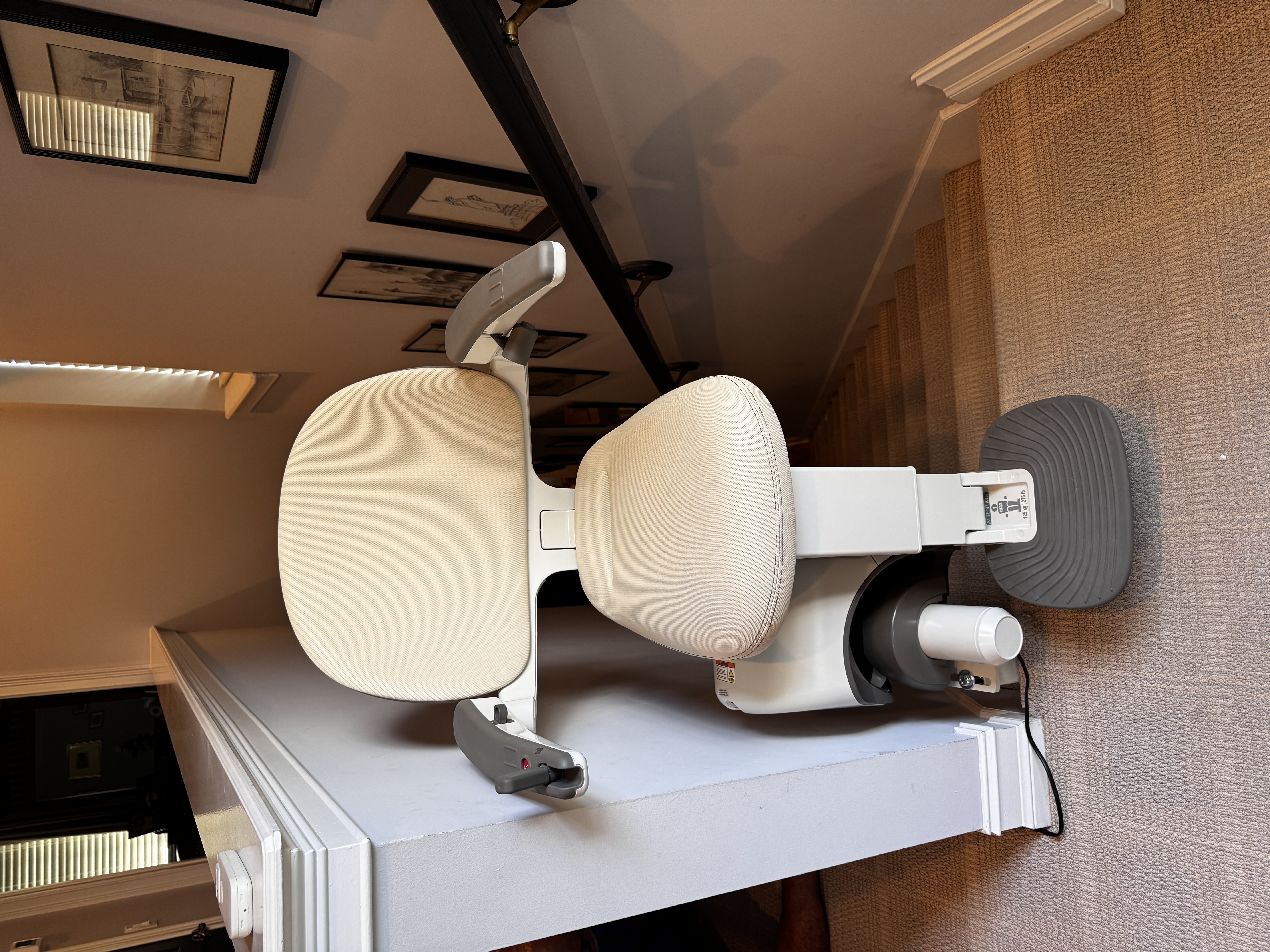
A straight staircase generally uses a standardized rail fitted along one uninterrupted flight. A staircase with a turn, curve, or intermediate landing usually needs a rail designed for that individual layout. The difference affects equipment selection, planning, and often the time required before installation.
NewDay Mobility provides straight stairlifts for standard straight staircases and custom curved stairlifts for staircases with turns, curves, intermediate landings, or more complex layouts. The appropriate choice comes from measuring your actual staircase rather than assuming that a nearby model will work.
Staircases with landings, turns, and narrow sections
Landings and turns can affect where the chair parks, how the rail travels, and whether you can transfer comfortably. Narrow sections may also make seat position, folded components, and walking clearance more important. Doorways, handrails, radiators, furniture, and nearby walls should be considered together.
If your staircase is tight or unusually shaped, our narrow-staircase fitting guide can help you understand the questions an installer will ask. The best solution may involve a custom rail or a different accessibility option, depending on the whole route through your home.
Indoor versus outdoor stairlift installations
An indoor lift and an outdoor lift face different conditions. Exterior stairs may be exposed to Florida rain, heat, humidity, and salt air, so the equipment and installation plan must suit that environment. Drainage, shelter, parking position, and maintenance access can all influence the assessment.
NewDay Mobility offers outdoor stairlifts designed for exterior staircases. You can also review guidance on outdoor stairlift planning before requesting an assessment, especially if you are comparing a lift with a ramp or vertical platform lift.
How staircase measurements affect equipment selection
Measurements help determine whether the rail, chair, and rider can fit safely through the route. Installers look beyond the width of one step, considering the bottom and top landings, transfer space, door swings, and obstacles that could interfere with travel.
A useful measurement discussion usually includes these areas:
- Usable stair width at the narrowest point.
- The shape and length of each flight.
- Landing depth at the top and bottom.
- Nearby doors, trim, rails, and fixed objects.
Those details help the installer recommend equipment that fits the home instead of forcing the home to accommodate an unsuitable layout. For more background, see this guide to stairlift width and clearance.
What homeowners should know about walls, floors, and structural support
Even though the rail normally attaches to the stairs, the rest of the staircase still affects planning. Your installer may need to work around baseboards, trim, existing handrails, flooring, or signs of wear. Older Florida homes can have remodeled surfaces or stair construction that is not obvious at first glance.
A careful review protects both the equipment and your home. It also gives you a chance to discuss appearance, removal, and any concerns about marks before you approve the work.
When nearby walls may affect installation planning
A wall usually does not carry the stairlift, but its distance from the rail can affect rider clearance and the position of the chair. A doorway at the bottom, a narrow turn, or a protruding finish may change where the lift can park. Walls can also affect how easily you enter or leave the seat.
These are planning issues rather than reasons to assume the lift must be wall-mounted. The installer can compare the available space with the proposed rail route and explain any tradeoffs.
How installers work around baseboards, trim, and handrails
Baseboards and decorative trim may need to be considered where the rail passes or where the chair approaches a landing. Existing handrails can also affect usable width and transfer space. In some homes, the most practical solution is to retain these features while positioning the stairlift carefully; in others, a change may need to be discussed.
Ask what will remain in place, what might be moved, and how the finished installation will affect everyday walking access. A written scope can make those details easier to review with family members.
Addressing concerns about damage to stairs or flooring
Most stairlift installations involve fastening brackets to the stair treads, so it is reasonable to ask about holes, marks, and removal. The likely impact depends on the stair material, the mounting plan, and the condition of the home. Tile, concrete, wood, and exterior surfaces may require different assessment and installation considerations.
The stairlift installation and damage guide explains why professional mounting is different from making major structural changes to a wall. Ask your installer what may remain if the lift is later removed, and do not assume that every staircase will look identical afterward.
Why professional assessment is important for safe mounting
A site assessment confirms whether the stairs can support the proposed mounting arrangement and whether the rail will leave adequate clearance. It also helps identify conditions that are easy to miss in a photograph, such as uneven treads, tight landings, or an awkward transfer point.
Professional assessment is especially valuable when the staircase is old, narrow, curved, outdoors, or already showing wear. It turns a general product question into a practical plan for your particular home.
How installation works in a Florida home
Installation begins before the installer arrives with tools. You should expect a conversation about the rider’s routine, the staircase, the equipment, and the areas where transfers will happen. The final sequence varies by product and home, but a clear process helps you know what to expect.
Florida conditions can add considerations for exterior stairs, power access, humidity, and scheduling. Your provider should explain which parts are confirmed and which depend on equipment availability or the staircase configuration.
The steps involved in a professional site assessment
The assessment usually includes a review of the staircase shape, width, landings, obstacles, and intended entry and exit points. The installer may discuss whether a straight, curved, or outdoor system is appropriate and ask about the rider’s comfort and mobility needs.
You can make the visit more useful by preparing a few practical details:
- Which floors the rider needs to access.
- Where the rider feels least steady on the stairs.
- Whether other household members need to keep using the staircase.
- Whether the installation location is indoors or outdoors.
This information supports a recommendation based on actual daily routines rather than a product displayed in isolation. It also helps produce a more accurate installation scope.
Preparing the staircase and surrounding area
Before installation, clear loose items, furniture, and decorations near the stairs and landings. The installer may protect nearby surfaces and confirm access to the work area. If you have concerns about a handrail, door, or flooring, raise them before the equipment is mounted.
You generally do not need to redesign the staircase. Preparation is mainly about safe access, clear working space, and confirming the agreed installation plan.
What happens during stairlift installation
The installer positions the brackets, secures the rail to the stair treads, and assembles the chair and operating components. The work must follow the selected equipment’s installation requirements and the staircase measurements gathered during assessment. Curved systems may involve additional preparation because the rail is designed for the individual staircase.
Installation timing varies. A standard straight stairlift may be available for fast or next-day installation when the product, inventory, location, schedule, and conditions allow, while a custom curved system generally requires additional design and manufacturing time.
How the installer tests the lift before handoff
Before you use the lift, the installer should run it through its travel path and check the stopping points, controls, seat position, and clearances. You should receive an explanation of ordinary operation, transfers, and basic care. If another family member or caregiver will help, invite that person to the handoff.
Do not hesitate to ask for another demonstration. A calm, repeated walkthrough can help you feel comfortable with the chair, controls, and parking positions before the installer leaves.
Choosing the right stairlift for your staircase and needs
The right stairlift is a match between the staircase and the person using it. A family may focus first on price, but everyday comfort, transfer ability, clearance, and the route through the home matter just as much. You should also consider who else uses the stairs and how often the lift will operate.
NewDay Mobility guides homeowners based on their staircase, home, mobility needs, budget, and installation requirements. That broad discussion can help you compare a stairlift with a vertical platform lift or ramp when a stairlift is not the best fit
Matching the lift to mobility requirements
Think about how you sit, stand, transfer, and operate controls. You may need to discuss seat position, support, travel direction, and where you can safely enter or leave the chair. Weight and user requirements also affect equipment selection, so provide accurate information during the assessment.
A useful recommendation should address the person who will use the lift, not just the staircase. If needs may change, ask how the proposed system can accommodate the household’s longer-term plans without assuming a feature that has not been confirmed.
Considering rail layout, seat position, and staircase clearance
The rail route determines where the chair travels and parks. Seat position affects transfers, while folded components and the remaining walking width affect other household members. A landing that looks spacious from a distance may feel tight once a chair, doorway, and person are considered together.
Ask to see or discuss the intended top and bottom parking positions. This simple step can reveal whether the lift will block a doorway, interfere with a preferred handrail, or make a daily transfer uncomfortable.
When a vertical platform lift may be a better option
A vertical platform lift may be worth discussing when you need to move a wheelchair or mobility device between levels without transferring to a stairlift seat. It can also be relevant where the route is not a conventional staircase or where a ramp would require too much space.
NewDay Mobility provides vertical platform lifts as part of its additional mobility solutions. The right choice depends on the home, available space, mobility device, and access route, so an assessment is still necessary.
Continued service and repair support after installation
Continued service and repair support matter after installation, particularly for a frequently used or outdoor stairlift. Ask how service requests are handled, what maintenance may be recommended, and which items are covered by the applicable warranty.
NewDay Mobility provides professional service after installation. Confirm the current service and warranty terms for the specific equipment included in your proposal.
Understanding stairlift costs and planning considerations
Stairlift pricing is shaped by the staircase, the equipment, the rail, installation requirements, location, and selected options. A straight system is often simpler to price than a custom curved system, but the only reliable figure for your home comes from a personalized quote. General online prices should not replace an assessment.
You can also review a Florida stairlift cost guide to organize questions about quotes, warranties, financing, and possible funding sources. Keep the quote, installation scope, and terms together so you can compare options fairly.
Why straight and curved stairlift pricing differs
A straight stairlift generally uses a standardized rail fitted to a straight staircase. A curved stairlift requires a rail designed for the individual staircase, including its turns, curves, or landings. That additional design work is one reason curved pricing requires a personalized quote rather than a fixed figure.
NewDay Mobility may offer straight stairlifts starting at $3,990 installed, when applicable. Actual pricing depends on the staircase, model, rail length, options, installation requirements, location, and current promotions; that starting figure does not apply to every installation.
Factors that can affect the final installation quote
Several details can change the scope of work. Ask the provider to identify each one instead of accepting a single unexplained total. Common quote topics include:
| Quote factor | Why it matters |
|---|---|
| Staircase configuration | Straight, curved, landing, or complex layouts require different equipment planning. |
| Rail length and design | The route and rail requirements vary with the staircase. |
| Indoor or outdoor setting | Exterior conditions may affect equipment selection and installation planning. |
| Installation requirements | Access, existing finishes, and clearance concerns can change the work involved. |
After reviewing the quote, confirm which equipment, labor, preparation, and follow-up services are included. That makes it easier to compare two proposals that may otherwise appear similar.
What to confirm about warranty coverage
Ask whether the proposed stairlift qualifies for a warranty and which components, labor, and time periods it covers. Warranty terms can vary by product, model, component, and current program. You should also ask how service requests are handled and whether maintenance is separate.
NewDay Mobility offers a lifetime warranty on qualifying stairlifts, but you should confirm the exact coverage for the lift you are considering. Written terms are more useful than a general promise made during an informal conversation.
How financing and current promotions may apply
Financing can spread the cost, but approval and terms are not the same for every customer. Ask about the current program, the amount financed, applicable terms, and whether a promotion is available for the equipment and installation you need.
NewDay Mobility offers financing options to qualified customers, subject to approval and applicable terms. Available programs and promotions can change, so request current written details with your quote
Finding stairlift help in Florida
Choosing an installer is about more than finding equipment that appears to fit. You want a provider that can assess the staircase, explain the installation, support the equipment afterward, and give you current information about availability and price. This matters whether you live near Orlando, Tampa, Palm Coast, Melbourne, or elsewhere in the service area.
NewDay Mobility serves homeowners throughout its Florida service area, including communities in counties such as Orange, Brevard, Volusia, Broward, Palm Beach, and others. Coverage can depend on location, product, installation requirements, and scheduling, so confirm your address directly.
Questions to ask about installation and service
Before choosing a provider, ask who will assess the home, how the rail will be mounted, and what testing is included. Also ask how to request repair or service after the installation. Clear answers can help you distinguish a complete support plan from a product-only sale.
You may also want to ask about future removal, warranty coverage, continued service, and what happens if the staircase requires a custom solution. The answers should relate to your proposed equipment, not only to stairlifts in general.
Confirming product availability and installation timing
Availability depends on the selected equipment, inventory, staircase configuration, location, and scheduling. Straight stairlifts may qualify for fast or next-day installation when conditions allow, while curved systems usually need additional design and manufacturing time.
Ask for an estimated timeline after the assessment and find out which part of the schedule is confirmed. That is especially helpful if you are coordinating a hospital discharge, a move, or support from family members.
Checking whether your location is within the service area
Florida is a large state, and service coverage is not automatically identical everywhere. Check whether your county and address are within the provider’s current service area. If you live outside a listed area, ask whether distance, equipment, or scheduling changes what is possible.
Do not rely only on a broad “Florida” label. A direct location check gives you a clearer answer about assessment, delivery, installation, and future service.
Getting a recommendation based on your staircase configuration
Bring photos or measurements if requested, but expect an in-home assessment for a dependable recommendation. Explain the staircase shape, the rider’s mobility needs, outdoor exposure, and any concerns about clearance or wall and floor finishes.
A provider should be able to explain why a straight, curved, outdoor, vertical platform, or other mobility solution fits the situation. If you are ready to compare options, you can request a consultation and ask for guidance based on your actual staircase.
Plan Your Next Step
If stairs are making daily movement harder, arrange a professional conversation about a stairlift or another home mobility solution. A tailored assessment can help you understand your options, installation needs, and current pricing before you decide.
Conclusion
Most stairlifts attach to the stair treads through mounting brackets rather than to the wall, but the safest choice still depends on your staircase, home, and mobility needs. With a professional assessment, clear quote, and discussion of service and warranty terms, you can plan a solution that supports easier movement through your Florida home.
Frequently Asked Questions
Do stairlifts attach to stairs or the wall?
Most stairlifts are mounted to the stair treads with brackets that support the rail. The wall may affect clearance and planning, but it is usually not the primary attachment point.
Can a stairlift be installed on a curved staircase?
Yes, curved stairlifts are designed for staircases with turns, curves, intermediate landings, or more complex layouts. The rail is planned for the individual staircase.
Will installing a stairlift damage my walls?
Because the rail is generally secured to the stair treads, installation usually does not require mounting the lift to the wall. Ask about the exact mounting points and possible marks on the stairs or flooring before work begins.
Can a stairlift fit on narrow stairs?
It may be possible, but usable width, landing space, handrails, doors, and the rider’s transfer needs all matter. A professional assessment is the best way to determine whether a suitable layout exists.
How long does stairlift installation take?
Timing depends on the staircase, equipment, availability, location, and installation conditions. Straight systems may be installed quickly when available, while custom curved systems generally require additional design and manufacturing time.
Are outdoor stairlifts suitable for Florida homes?
Outdoor stairlifts can be considered for exterior stairs, but weather exposure, drainage, salt air, maintenance access, and the staircase shape should be assessed before selecting equipment.
What should I ask for in a stairlift quote?
Ask for the proposed equipment, rail design, installation scope, total price, warranty coverage, service terms, availability, estimated timing, and any financing or promotional terms that apply to your situation.