
Key Takeaways
A stairlift can make movement between floors more manageable, but safe use depends on the equipment, the staircase, the installation, and the person using it.
- Look for secure seating, a seat belt, obstruction detection, and dependable controls.
- Match the stairlift type to a straight, curved, or outdoor staircase.
- Consider Florida heat, humidity, rain, storms, and power interruptions.
- Professional measuring, installation, testing, and follow-up service all matter.
- Ask for current pricing, warranty details, and service terms before choosing a provider.
How stairlifts protect users during everyday travel
If you are asking, “are stairlifts safe,” start with how the equipment supports ordinary trips up and down the stairs. A stairlift is designed to give you a seated way to move between floors rather than requiring you to climb each step. Its safety depends on using the available features correctly and choosing equipment suited to your mobility and staircase.
Seat belts, armrests, and secure seating
A properly positioned seat gives you a stable place to sit during travel. The seat belt helps keep you in position, while armrests provide support as you settle into the chair and prepare to move. You should use the belt every trip, even when traveling only one floor, and make sure the seat is fully secure before starting.
The right seat arrangement also matters if you have reduced balance or strength. During an assessment, explain how you normally sit, stand, and turn so the provider can consider your daily routine rather than treating the stairlift as a one-size-fits-all purchase.
Start-and-stop controls for smoother movement
Simple controls can make a stairlift easier to operate, especially if your hands are weak or your coordination has changed. You should be able to understand which control starts movement and how to stop when needed. Follow the manufacturer’s instructions for operating the control. Many stairlifts require you to hold it during travel and stop when you release it. Keep your hand in a comfortable position while riding.
A calm routine helps. Sit back, fasten the belt, check that the footrest and arms are clear, and then begin the journey. If the lift behaves differently than usual, stop using it and arrange service instead of trying to compensate with repeated starts.
Swivel seats and safer transfers at the top landing
A swivel seat can help you turn toward the landing before standing. This may reduce the need to twist while your feet are still near the stairs, particularly at the upper end where the landing may be narrow. Once the stairlift has stopped completely, swivel the seat toward the landing as instructed and make sure it locks in place before standing.
Keep a clear area beside the seat so you have somewhere stable to step. If you use a cane or walker, position it within reach before beginning the transfer, but do not let it obstruct the rail or footrest.
Footrests, sensors, and protection from obstacles
The footrest supports your feet while the lift travels, and sensors can help detect an object in the travel path on models equipped with that feature. Even with sensors, you should keep bags, blankets, toys, and household items away from the stairs. A clear travel path remains essential because no feature replaces ordinary care around moving equipment.
Before each trip, take a moment to check the steps and landings. Pay particular attention to pet toys, loose clothing, and items left on the stairs by other family members. This small habit can prevent interruptions and make daily use more predictable.
Safety features to look for before choosing a stairlift
Safety features should be discussed in the context of the person who will use the lift and the home where it will be installed. A feature is useful only when you understand its purpose and can operate it comfortably. Ask the provider to demonstrate the controls rather than relying on a brochure or a quick description.
The exact equipment and available options can vary by model, staircase, and installation requirements. If you are comparing costs as well as features, a Florida stairlift cost guide can help you identify the factors that should appear in a personalized quote.
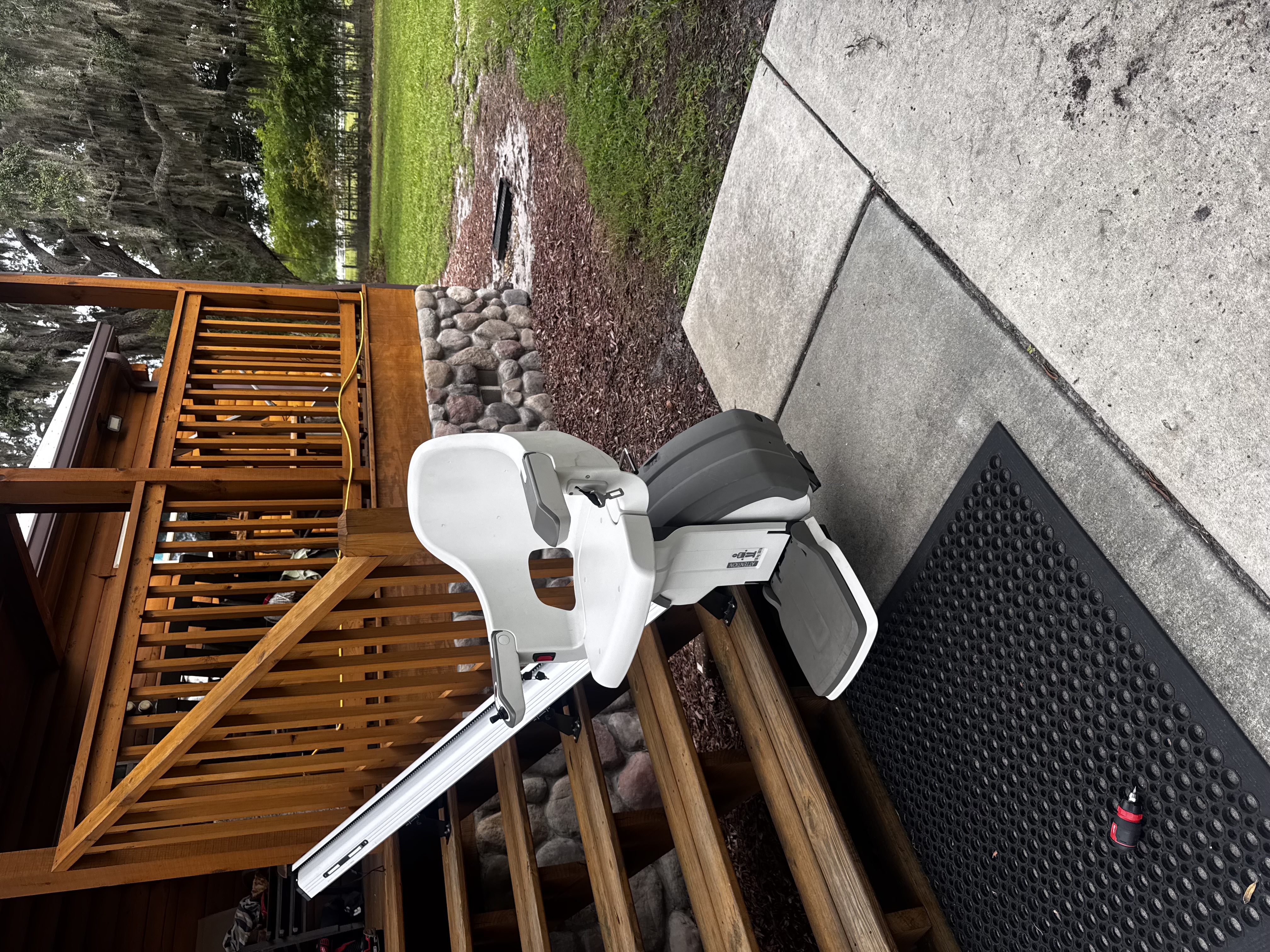
Obstruction detection and automatic stopping
Obstruction detection is intended to help the stairlift stop when something is in its path, depending on the model. Ask where the sensors are located and what happens when they activate. You should also learn how to clear the obstruction safely and restart the lift only after the path is open.
Do not test the system by placing an object in the way unless a qualified installer specifically demonstrates the procedure. A professional handover should explain normal warnings, stopping behavior, and who to contact if the safety control activates repeatedly.
Locking mechanisms and stable parking positions
A stairlift should remain stable when parked at the top or bottom of the staircase. Ask how the seat, swivel function, and any folding components lock into place. You should never stand until the lift has reached its intended landing position and the seat is ready for a transfer.
Parking also affects the people who continue to use the stairs on foot. Folding parts may help preserve usable space, but the actual clearance depends on the staircase and equipment. Have the installer show you the safest parking positions for your home.
Battery backup during power interruptions
Many stairlifts use rechargeable batteries, but you should confirm the specific setup and expected behavior for the model under consideration. Battery backup can allow travel during some power interruptions, although it does not mean unlimited operation during a prolonged outage. Ask how the batteries charge and what warning signals indicate a low charge.
In Florida, include the stairlift in your household outage plan. Keep the charging area accessible, know how to contact service, and avoid waiting until a storm is approaching to ask basic questions about operation.
Remote controls and call-send functionality
Remote controls can allow you to call the stairlift to another landing or send it away after use, depending on the equipment. This can be helpful when more than one person uses the staircase, but every user should understand which button does what. Store remotes where they will not be confused with television or garage controls.
Ask whether the controls are comfortable for the intended user and whether the signal works from the locations where you expect to use them. A short demonstration can reveal whether the arrangement feels intuitive before installation is complete.
Matching stairlift safety to your staircase
The safest choice begins with the physical layout of your stairs. A straight staircase, a winding staircase, and an exterior run exposed to weather each create different installation considerations. Your provider should assess the rail path, landings, clearance, and the user’s ability to transfer safely.
NewDay Mobility provides straight, curved, and outdoor stairlift options, with guidance based on the staircase, home, mobility needs, budget, and installation requirements. The goal is not to select a feature-rich lift in isolation, but to find equipment that fits the way you actually move through the home.
Straight stairlifts for standard straight staircases
Straight stairlifts are intended for standard straight staircases and generally use a standardized rail fitted to that run. They may be a practical choice when there are no turns or intermediate landings. Even a simple staircase still needs careful measuring because width, doorways, landing space, and transfer habits affect safe use.
Ask whether the seat and footrest can be parked without creating an unnecessary obstacle. You should also discuss who else uses the stairs and whether the lift needs to remain folded in a particular position when not in use.
Curved stairlifts for turns, landings, and complex layouts
Curved stairlifts are designed for staircases with turns, curves, intermediate landings, or more complex layouts. Their rails are custom designed to fit the individual staircase, so the assessment and planning process may involve more detail than a straight installation. A curved layout does not automatically rule out a stairlift, but it does require an accurate fit.
Discuss where you will enter and exit at each level, especially if the staircase changes direction near a landing. You can review curved stairlift options when considering a custom solution, while remembering that current suitability and availability should be confirmed for your home.
Outdoor stairlifts for exposed Florida stairways
Exterior stairs leading to a porch, garage, or entrance face conditions that indoor equipment does not. Rain, salt air in coastal areas, direct sun, and storm debris can affect how an outdoor installation should be planned and maintained. Equipment intended for outdoor use should be assessed for the actual location rather than assumed suitable because it is labeled for exterior access.
For a home in places such as Palm Coast, Tampa, or Palm Beach County, consider drainage, shelter, access to the lift’s charging location, and how you will protect the lift when severe weather is expected. NewDay Mobility’s information on outdoor stairlifts is a useful starting point for thinking through exterior access.
Assessing stair width, landing space, and user mobility
A home assessment should cover more than the number of steps. The provider should look at stair width, landing depth, door swings, rail placement, and how the user approaches the chair. Your balance, leg strength, vision, memory, and ability to follow controls all belong in the conversation.
A short comparison can help you see why the same model is not automatically right for every home:
| Staircase or user factor | Why it matters | Question to ask |
|---|---|---|
| Straight or curved layout | Determines the rail approach | Does the rail follow every turn and landing? |
| Narrow stairs | Affects clearance for the chair and foot traffic | How much usable space remains when parked? |
| Outdoor exposure | Adds weather and maintenance considerations | How should the equipment be protected and serviced? |
| Transfer ability | Affects seat, swivel, and landing needs | Where will the user stand safely? |
After reviewing these points, ask for a clear explanation of the recommendation. You should understand not only what is being proposed, but why it suits your staircase and daily routine.
Why professional installation matters
Professional installation is part of stairlift safety, not merely a delivery service. The installer must translate measurements and user needs into a secure rail position and a workable transfer at each landing. A careful handover also gives you a chance to practice before the equipment becomes part of your daily routine.
Ask what the installation includes, how the stairs will be protected during the work, and what happens if the site presents an unexpected issue. Written details can help you compare providers without relying on vague promises.
Measuring the staircase and planning the rail
Accurate measurements help determine whether a straight or custom curved approach is appropriate. The installer should consider the full rail path, nearby walls, landings, doors, and the space needed to sit down and stand up. For complex stairs, a rail designed around the actual staircase is especially important.
Your assessment is also the right time to describe the user’s typical clothing, mobility aids, and transfer habits. These details can affect where the lift should stop and how the user will approach it.
Securing the equipment without compromising the stairs
The rail and related equipment must be secured according to the installation requirements for the chosen system. You should ask where the equipment will attach and how the installation affects stair use, trim, doors, and nearby areas. Do not accept a rushed explanation if you are unsure how the installation will fit into your home.
A professional team should leave the area orderly and explain any care instructions. If you notice movement, unusual vibration, or a loose component after installation, stop using the lift and contact the provider.
Testing safety controls before handover
Before the installer leaves, you should see the stairlift travel through its full intended route. Practice fastening the belt, using the controls, operating the swivel seat, and responding to a stop. Ask how obstruction detection, charging, remote controls, and warning signals work on your specific equipment.
Write down the service contact information and keep the operating instructions somewhere easy to find. A confident handover helps you and your family respond calmly if a question arises later.
Understanding when fast installation may be available
Straight stairlifts may qualify for fast or next-day installation when the product, staircase configuration, inventory, location, and scheduling allow. That possibility should not be treated as a guarantee. Custom curved stairlifts generally require additional design and manufacturing time before installation can be scheduled.
If timing matters because of a recent change in mobility, ask for a realistic estimate after the assessment. NewDay Mobility can confirm current availability and timing based on the specific staircase and product being considered.
Florida conditions that can affect stairlift safety
Florida homes bring practical considerations that may not be as pressing in other regions. Heat, humidity, heavy rain, coastal air, and hurricane-related outages can affect the environment around a stairlift. These conditions do not make stairlifts unsafe by themselves, but they make planning and maintenance more important.
Your household routine matters, too. Seasonal residents, grandchildren, pets, and frequent visitors can all change how clear and predictable the staircase remains. Include those realities when discussing the installation.
Managing heat, humidity, and indoor air quality
Indoor stairlifts are usually placed in a home environment, but Florida humidity and strong air-conditioning cycles can still influence comfort and housekeeping. Keep the rail, seat, and controls free of dust and moisture, and follow the equipment instructions for cleaning. Do not spray cleaning products directly onto electrical controls.
If the staircase is near an open entry, screened area, or humid utility space, mention that during the assessment. The installer can consider the setting and explain any equipment-specific precautions.
Protecting outdoor equipment from rain and storms
Outdoor stairlifts need attention after heavy rain and wind. “Have leaves, branches, and standing water cleared from the travel path. Do not operate the lift if storm debris is touching the rail or if the equipment appears damaged.
A provider should explain how the outdoor model is intended to be cared for and when service is needed. Coastal homeowners may also want to ask how salt exposure and regular rinsing should be handled for the selected equipment.
Planning for hurricanes and extended power outages
A hurricane plan should include the person who relies on the stairlift, the equipment’s battery status, and a safe alternative if the lift cannot be used. Charge the system as directed, keep emergency routes clear, and avoid using a visibly damaged lift after a storm. If the household loses power for an extended period, call the provider for guidance rather than repeatedly testing the equipment.
Make sure family members know where the operating instructions and service number are kept. Planning in advance is especially helpful when an older adult lives alone or caregivers rotate between visits.
Keeping stairs clear in busy households and seasonal homes
Clutter is one of the easiest safety issues to prevent. Establish a simple household rule that stairs are not a storage area, even temporarily. Children and visitors may not understand the equipment’s travel path, so a reminder near the staircase can be useful without obstructing access.
Before each ride, check the steps, landings, and footrest. The following routine takes only a few seconds:
- Remove bags, toys, shoes, and loose objects from the travel path.
- Check that pets and children are away from the stairs.
- Sit fully back, fasten the seat belt, and place both feet on the footrest.
- Stop and report unusual sounds, movement, or warning signals.
- If the lift has been unused for several months, check the manufacturer’s instructions and arrange service if anything appears damaged or does not operate normally.
This routine works well in a year-round home and in a seasonal property that may be reopened after several months. Consistency is more useful than trying to remember a different procedure every time.
Safe stairlift use for older adults and people with limited mobility
A stairlift can support independence, but it does not remove every fall risk around the staircase. The person using it still needs a safe way to approach the seat, transfer at the landing, and respond to controls. Families should focus on repeatable habits rather than rushing to complete a trip.
If the user’s balance, strength, vision, or memory changes, revisit the routine and contact the provider when equipment adjustments or additional guidance may be needed. A caregiver should not assume that a user who managed well during the first week will always manage equally well later.
Entering and exiting the seat with less fall risk
Approach the chair slowly and sit down before placing your feet on the footrest. Use the armrests for support only as instructed for your model. At the landing, wait until the lift has stopped and the seat is locked in the transfer position before standing.
Keep walking aids close enough to reach after the seat has stopped, but do not place them where they can catch on the rail. If the landing is tight, practice the transfer with a family member or professional present.
Using the controls, seat belt, and swivel function correctly
Use the control exactly as demonstrated during handover. Fasten the belt before moving, keep your hands and clothing inside the seating area, and use the swivel function only when the lift has reached the proper position. If you are unsure about a control, stop and ask for a refresher rather than guessing.
Remote controls should be stored where the intended user can reach them but children cannot play with them. Replace or recharge batteries according to the equipment instructions and report repeated control problems.
Supporting users with balance, strength, or memory concerns
A caregiver can help by using the same short sequence every time: sit, secure the belt, place the feet, check the path, and start. Clear language and a quiet environment may make the routine easier for someone who becomes distracted or forgetful. Avoid pulling a user into the chair or pushing them to move faster than is comfortable.
If the person cannot reliably follow the basic steps, discuss the situation with a qualified professional and the equipment provider. The right decision may involve additional supervision, a different mobility solution, or changes to the surrounding space.
Keeping children, pets, and loose clothing away from moving parts
Children and pets should stay away from the stairlift while it is moving or being operated. Scarves, blankets, robe ties, and other loose items should remain clear of the rail, seat, footrest, and controls. Ask visitors to follow the same rule, even if they are only in the home briefly.
A clear staircase protects everyone, including people who still use the stairs on foot. If an item becomes caught, stop the lift and contact service rather than reaching toward moving parts.
Maintenance, service, and long-term reliability
Regular care helps you notice small problems before they interrupt daily travel. Maintenance does not need to be complicated, but it should follow the equipment instructions and the provider’s recommendations. Keep records of service visits, repairs, and any recurring warning signals.
Professional service is particularly useful when the lift is outdoors, used frequently, or relied on by someone who has no easy alternative between floors. Do not continue using equipment that appears unsafe simply because it still moves.
Cleaning accessible surfaces and keeping sensors clear
Use the cleaning method recommended for your model and keep moisture away from electrical components. Wipe the seat and armrests regularly, clear dust from accessible surfaces, and make sure the footrest is free of objects. Sensors should remain unobstructed and should not be covered with tape or decorations.
Outdoor equipment may need more frequent visual checks after rain and wind. If you are uncertain which products are safe, ask the provider before applying a household cleaner.
Recognizing unusual noises, slow movement, or error signals
Changes in sound, speed, stopping behavior, or charging can be early signs that service is needed. A single unfamiliar noise may be difficult to diagnose from memory, so note when it happens and whether the lift is traveling up, down, starting, or stopping. Do not treat an error signal as something to ignore.
Stop using the stairlift if the movement becomes erratic or if a component appears loose. A clear description of the symptom can help the service team respond more efficiently.
Scheduling service and addressing repairs promptly
Follow the service schedule provided for your equipment and arrange repairs as soon as you notice a problem. Delaying a repair can leave the user without a dependable way to reach another floor and may allow a minor issue to become more disruptive. Keep the service contact information accessible to family members and caregivers.
NewDay Mobility provides stairlift service and repair, with continued support after installation. Ask what service coverage applies to the stairlift you purchase and how to request help in your Florida service area., and confirm how to request help in your Florida service area.
Confirming warranty coverage and replacement support
Warranty terms can vary by product, model, component, and current program. Before you commit, ask what is covered, how long coverage lasts, and whether labor, batteries, or replacement parts are treated differently. Get the details in writing so your family knows what to expect.
NewDay Mobility offers a lifetime warranty on qualifying stairlifts, but you should confirm the exact coverage for the specific stairlift under consideration. Also ask how replacement support works if a part is no longer readily available.
Choosing a stairlift provider with safety in mind
Choosing a provider is about more than finding a lift that fits the staircase. You want clear explanations, careful installation, reachable service, and terms that match your household’s needs. A good assessment should leave you better informed, even if you need time before making a decision.
Consider the user’s daily routine, the home’s layout, and the local environment together. For homeowners across Florida.
Questions to ask during an in-home assessment
Bring a written list to the appointment so important details do not get lost. Ask who will measure the staircase, how the user will transfer at each landing, which safety features are included, and what happens after installation. You can also ask how the provider handles service during a power interruption or severe weather event.
It is reasonable to ask for an explanation in plain language. If you are helping a parent or another family member, include the future user in the conversation whenever possible.
Comparing equipment based on the user and staircase
Compare equipment by fit and usability rather than by feature count alone. A model that works well on a straight indoor staircase may not suit a curved layout, an exterior run, or someone who needs a particular transfer position. Discuss width, seating, controls, outdoor exposure, battery operation, and maintenance expectations.
The assessment should connect each recommendation to a real need. If a feature does not solve a concern in your home, ask whether it is necessary and how it affects the quote.
Reviewing installation, service, and warranty terms
Read the installation scope before scheduling work. Confirm what is included, how the rail will be secured, how long the provider expects the work to take, and what training you receive at handover. Then review service response procedures, warranty limitations, repair costs, Ask NewDay Mobility for current straight stairlift pricing and any available promotions; the final quote depends on the staircase, model, and installation.
For general questions about home mobility choices, the NewDay Mobility service overview describes stairlifts and other accessibility solutions. Current product availability and terms should still be confirmed for your staircase.
Getting current pricing and availability from NewDay Mobility
Pricing depends on the staircase, model, rail length, options, installation requirements, location, and current promotions. Straight stairlifts may be available starting at $3,990 installed when applicable, but that figure does not apply to every stairlift or installation. Custom curved stairlifts require a personalized quote because each rail is designed for the individual staircase.
If you are ready to discuss your home, request an assessment and ask for current pricing, availability, installation timing, warranty coverage, and service terms. A clear quote should help you understand both the equipment and the support that comes with it.
Conclusion
Stairlifts can offer a safer, more manageable way to travel between floors when the equipment matches your staircase, the user understands the controls, and professional installation and service are part of the plan; Contact NewDay Mobility to discuss a stairlift that fits your Florida home and the person who will use it..
Frequently Asked Questions
Are stairlifts safe for older adults?
Stairlifts can be safe for many older adults when properly selected, professionally installed, and used according to the instructions. The user should be able to approach the seat, secure the belt, operate the controls, and transfer safely at the landing, with assistance when needed.
What safety features should a stairlift have?
Common features to discuss include a seat belt, secure armrests, a stable seat, obstruction detection, automatic stopping, safe parking positions, rechargeable batteries, and clear controls. The exact features available depend on the model and installation.
Can a stairlift be installed on a curved staircase?
Yes, curved stairlifts are designed for staircases with turns, curves, intermediate landings, or complex layouts. Because the rail is designed for the individual staircase, an in-home assessment is needed before the equipment can be specified.
Can a stairlift operate during a power outage?
Many stairlifts use rechargeable batteries that may allow operation during some power interruptions. You should confirm the battery system for the specific model and understand how long it may operate, particularly if Florida storms could cause an extended outage.
Are outdoor stairlifts suitable for Florida homes?
Outdoor stairlifts may be suitable for exterior stairs leading to entrances, porches, or garages when the equipment is intended for outdoor use and properly assessed for the location. Rain, heat, humidity, storm debris, and coastal exposure all require appropriate care.
How often does a stairlift need maintenance?
Maintenance needs vary by equipment, usage, and environment. Follow the manufacturer’s instructions and provider recommendations, and arrange service promptly if you notice unusual sounds, slow movement, charging problems, warning signals, or visible damage.
What should you ask before buying a stairlift?
Ask how the equipment fits your staircase and mobility needs, which safety features are included, how installation will be handled, what service is available, and what the warranty covers. Request current pricing and written terms rather than relying on a general estimate.